



“For more than a century, historic Medinah Temple has stood as Chicago’s exotic monument to adaptive reuse.
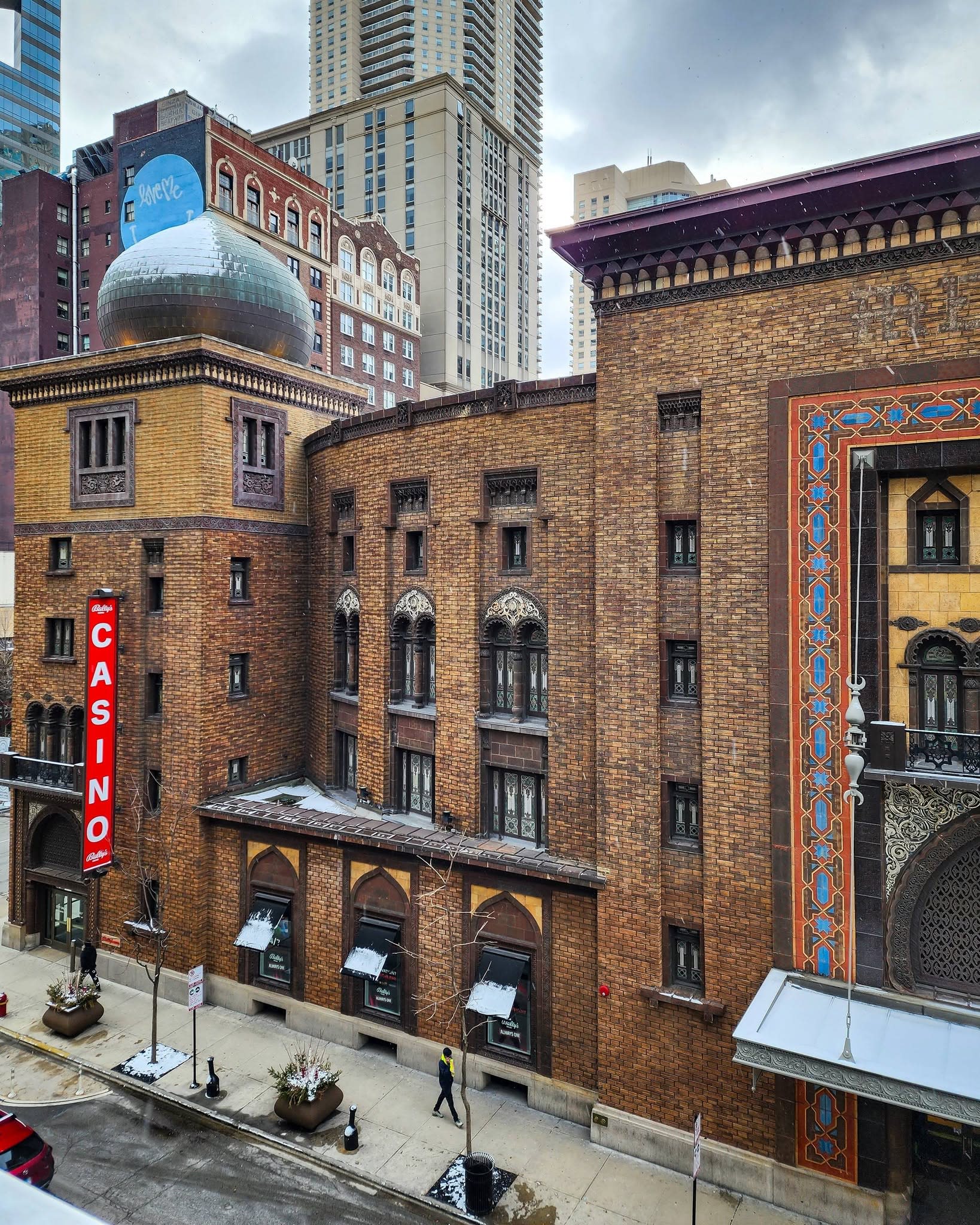
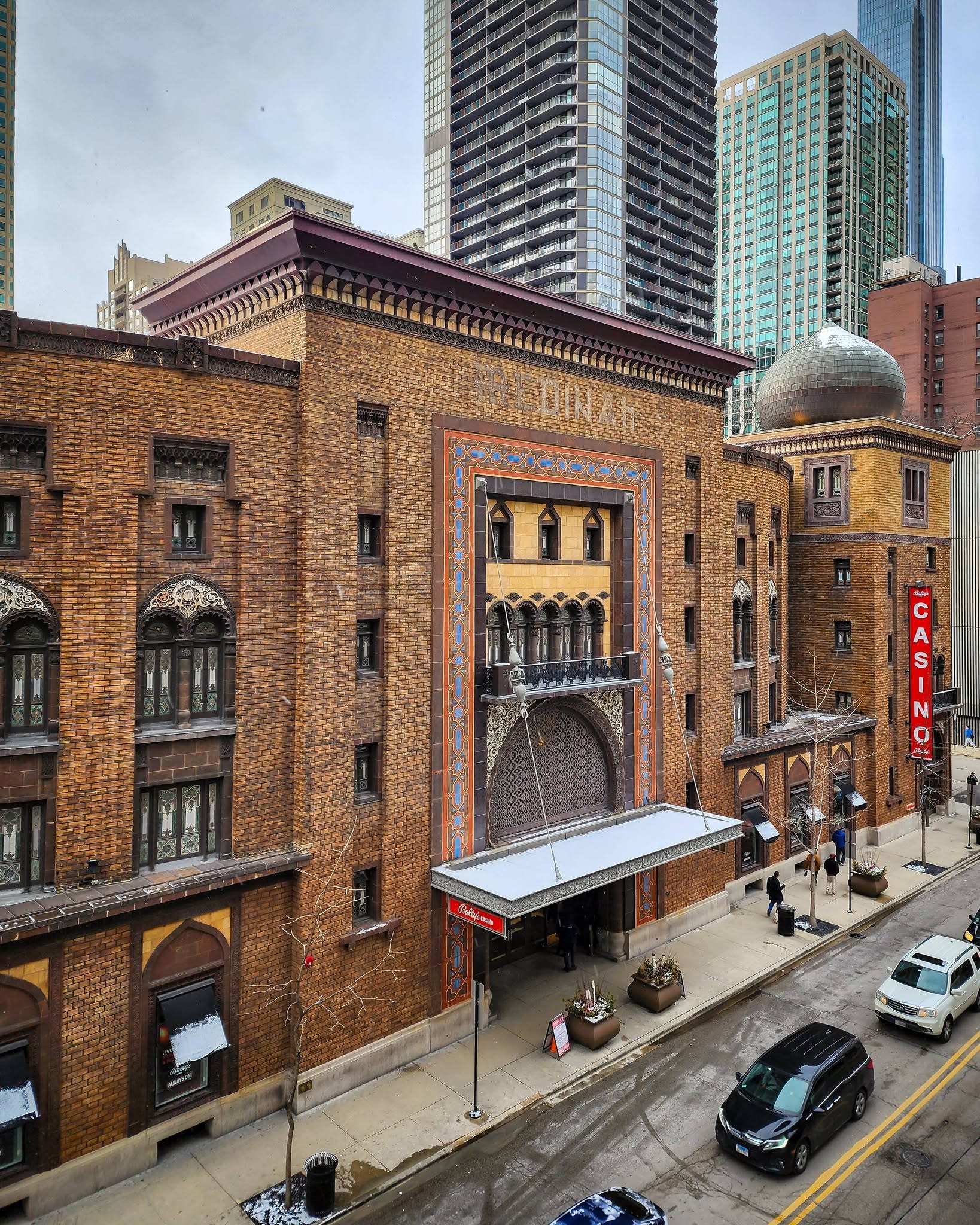
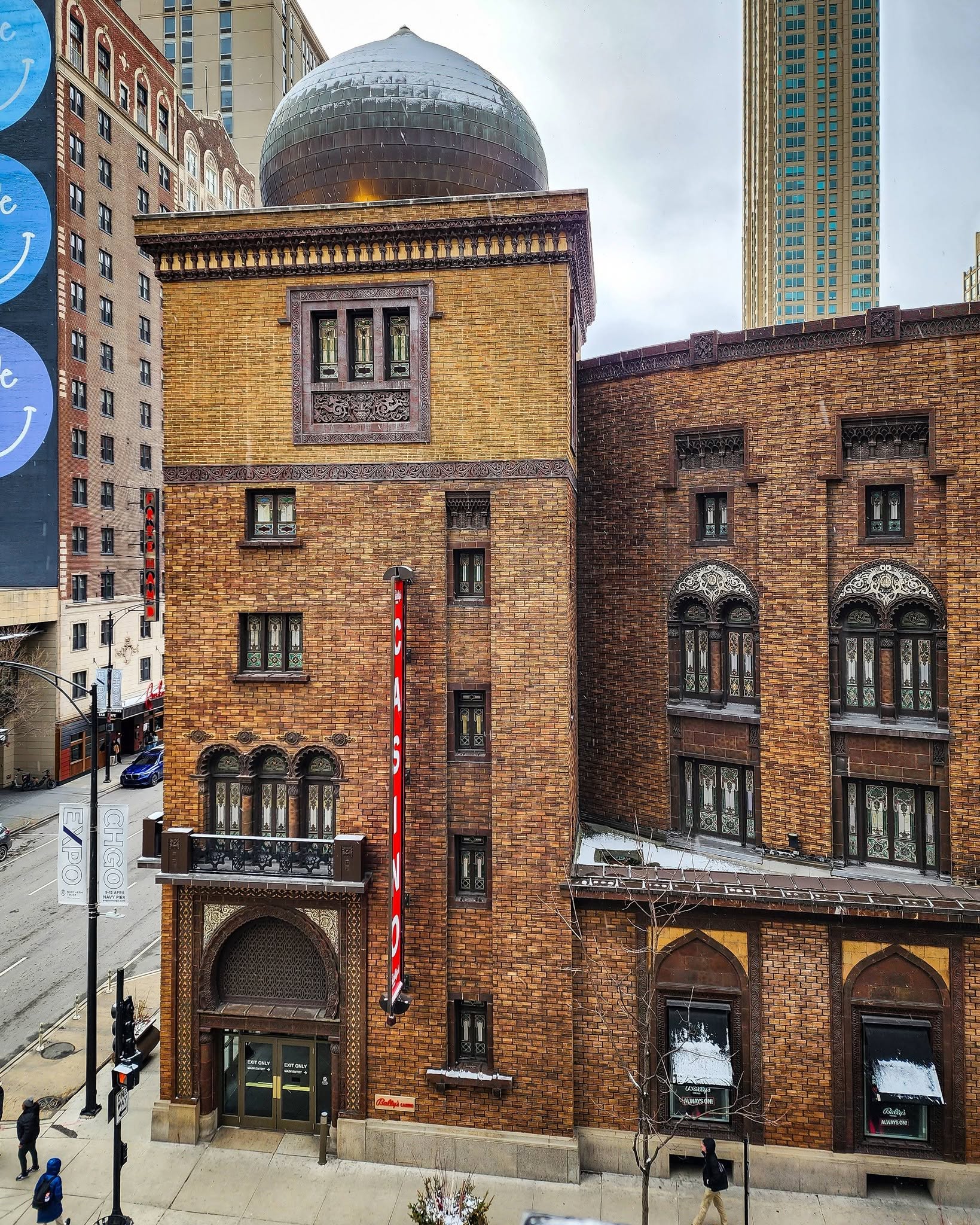
“The Moorish-style amphitheater topped by two massive copper onion domes has hosted the annual Shrine Circus, recording sessions for the Chicago Symphony Orchestra and, after flirting with demolition at the dawn of the new millennium, a furniture store.
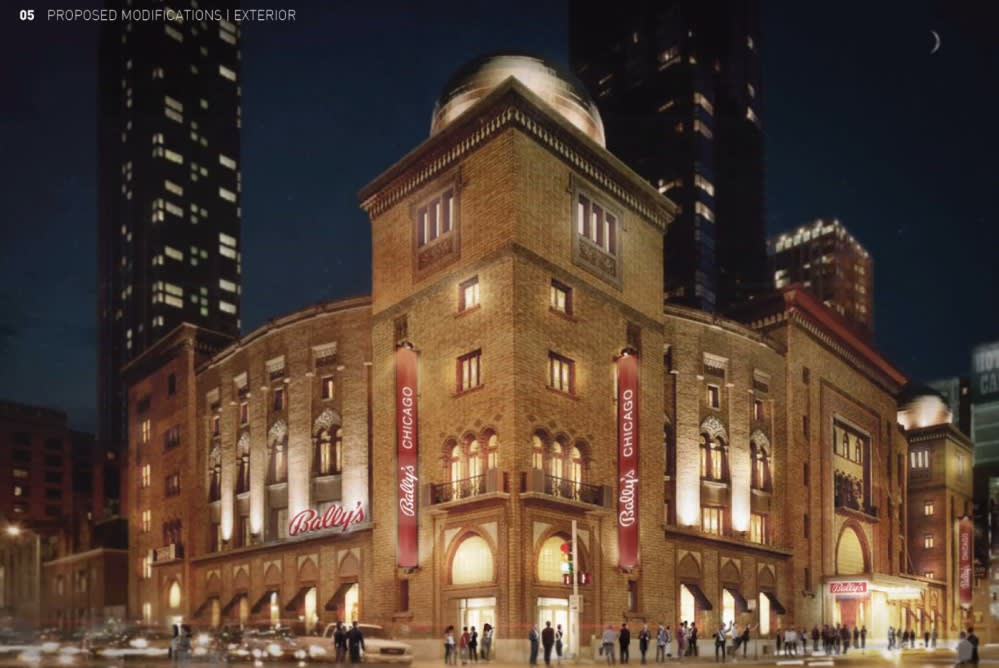
“Operating as a temporary casino since September 2023, the ornate 132,600-square-foot building on Wabash Avenue will soon need to reinvent itself again after Bally’s moves into its permanent facility next year.
“‘I’m completely open-minded,’ said Albert Friedman, 77, who is on his second run as owner of the landmarked Medinah Temple. ‘I want to come up with the highest and best use for the future of the property.’
“A prolific real estate developer dubbed the ‘Mayor of River North’ for his extensive renovation and repurposing of historic buildings lining the once-dilapidated Near North Side neighborhood, Friedman is already reimagining Medinah Temple as an experiential palace, with everything from a boutique hotel to a brick-and-mortar mall for online retailers on the table.
“‘These buildings could have all been lost. Those histories could have been lost,’ said Ward Miller, executive director of Preservation Chicago. ‘He really did infuse a vision and a huge amount of capital into restoring these buildings and revisioning them, rethinking them for a variety of different purposes.’
“Built by the Shriners in 1912, Medinah Temple was designed by architecture firm Huehl and Schmid. Over the years the venue hosted everything from concerts and high school graduations to the annual Shrine Circus. Amenities included a 30,000-pound pipe organ installed in 1915.
“But the building fell into disrepair and disuse. In 1996, Landmarks Illinois added Medinah Temple to its list of the 10 most endangered historic places in the state. There was good reason for concern. Medinah Temple had not yet been granted landmark status by the city and a developer was planning to raze it to make way for a new building.
“In 2000, politicos from then-Mayor Richard M. Daley to then-first lady Hillary Clinton intervened, recruiting Friedman to save Medinah Temple. Friedman came up with an inventive plan for adaptive reuse: getting Federated Department Stores to buy into redeveloping the building as a home furnishings store.
“The city named Medinah Temple as a Chicago landmark in 2001, protecting it from demolition.
“Friedman has launched a worldwide search to find new tenants, rolling the dice once again on the next adaptive reuse of one of Chicago’s most unusual historic buildings. That will entail reconfiguring the space while preserving its historic details, such as stained glass windows and the theater proscenium, which long framed the auditorium stage.
“‘It’s not just a warehouse, it’s not a box,’ Friedman said. ‘It’s an architectural landmark.’
“Miller, who was part of Landmarks Illinois when it led the call to save Medinah Temple three decades ago, said its transformation from auditorium to furniture store to casino shows how flexible historic buildings can be.
Under the stewardship of Friedman, Miller is confident that Medinah Temple will have a future as well, something that was once very much in doubt.
“‘We’re all really interested to see what becomes of Medinah Temple,’ Miller said. ‘Thanks to the landmark designation and Friedman’s acquisition of the site, we know that it’s not going to be demolished.’” (Channick, Chicago Tribune, 7/31/26)
Medinah Temple is a great Chicago preservation success story that demonstrates the flexibility granted to Chicago Landmark buildings. A building once slated for demolition has since served as a furniture store and a casino, and will now find a fourth life.
Preservation Chicago applauds Albert Friedman for decades of responsible, preservation-oriented stewardship in River North. The former Cook County Criminal Courts building at 54 W. Hubbard Street, the Reid Murdoch Building at 325 N. LaSalle Street, Tree Studios, and Medinah Temple itself are all standing and beautifully restored because Friedman saw value where others saw teardowns.
Anna Weaver played an leadership role in Medinah Temple and the Tree Studios being added to the World Monuments Watch and World Monuments Fund in 2000. Anna was an early member of Preservation Chicago prior to our formal incorporation in 2001.
Preservation Chicago hopes the next Medinah Temple reuse will be one that opens the interior to the public and reveals the auditorium volume, the stained glass, the proscenium and other details that make this building so extraordinary.
Read the full story at Chicago Tribune
Landmark Medinah Temple to be redeveloped again by ‘Mayor of River North’, Chicago Tribune, 6/14/19