



“One of Chicago’s most historic skyscrapers—the Pittsfield Building—is entering a new chapter. The 38-story Gothic Revival tower, completed in 1927, is being transformed from largely office space into hundreds of apartments, in what is described as one of the largest historic terra cotta façade restorations in the United States.
“Located at the corner of Washington Street and Wabash Avenue in the heart of Chicago’s busy Loop, the tower was among the tallest buildings in the city when it opened and helped define the city’s emerging skyline in the 1920s.
“Originally designed by Graham, Anderson, Probst, and White, the Pittsfield Building became known for housing doctors’ and dentists’ offices.
“The Pittsfield Building’s exterior is one of its defining features. The building is clad in polished black granite at street level and gray terra cotta above, with Gothic ornamentation concentrated around its lower floors, setbacks, and tower crown.
“‘The extensive multi-million dollar exterior masonry and terra cotta restoration effort at the Pittsfield has begun, and construction is now underway,’ architect Robert Harris, a senior associate at Pappageorge Haymes Partners, told Newsweek. Harris said the building’s façade ‘represents one of the finest remaining terracotta clad high-rise examples of the era’ and is currently undergoing one of the largest terra cotta restoration projects in the country.
“The property’s landmark status is central to the project. Harris noted that the Pittsfield is both a City of Chicago Landmark and part of a downtown historic district, while also pursuing National Historic Landmark status. Those designations require preserving many of the building’s most important historic features, including its façade, entry lobbies, atrium, and common corridors.
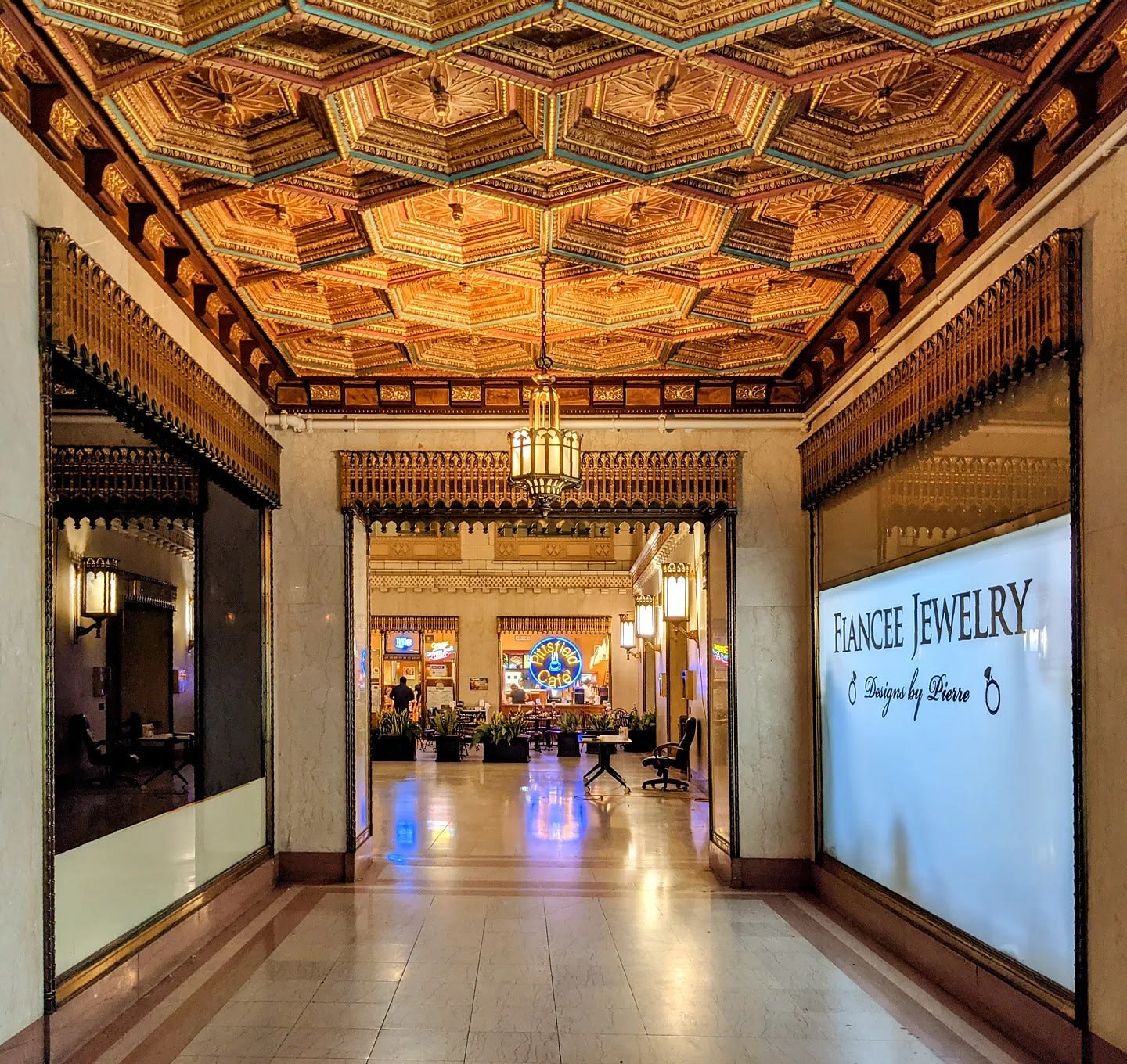
“Among the building’s most remarkable surviving features are its ornate, hand-painted coffered ceilings, cast-bronze elevator doors, and intricate marble finishes. Harris said these elements showcase a level of craftsmanship that would be extraordinarily difficult to reproduce today.
“‘One of the most fascinating aspects of historic buildings of this era and earlier is that they were designed and constructed to such a high level of intricacy and quality without the benefit of so many modern technologies we have now come to rely on today,’ he said.
“While the architects continue refining aspects of the interior design, Harris said the historic elements will be restored and preserved, serving as inspiration for new design features introduced as part of the conversion.
“Harris described the project as a ‘unique and inspirational challenge,’ with the broader vision for the building entailing a mix of various uses. This could include a subterranean speakeasy, retail spaces, restaurants, event venues, a public museum, and a rooftop observation deck, in addition to the new apartments.” (Kim, Newsweek, 9/2/26)
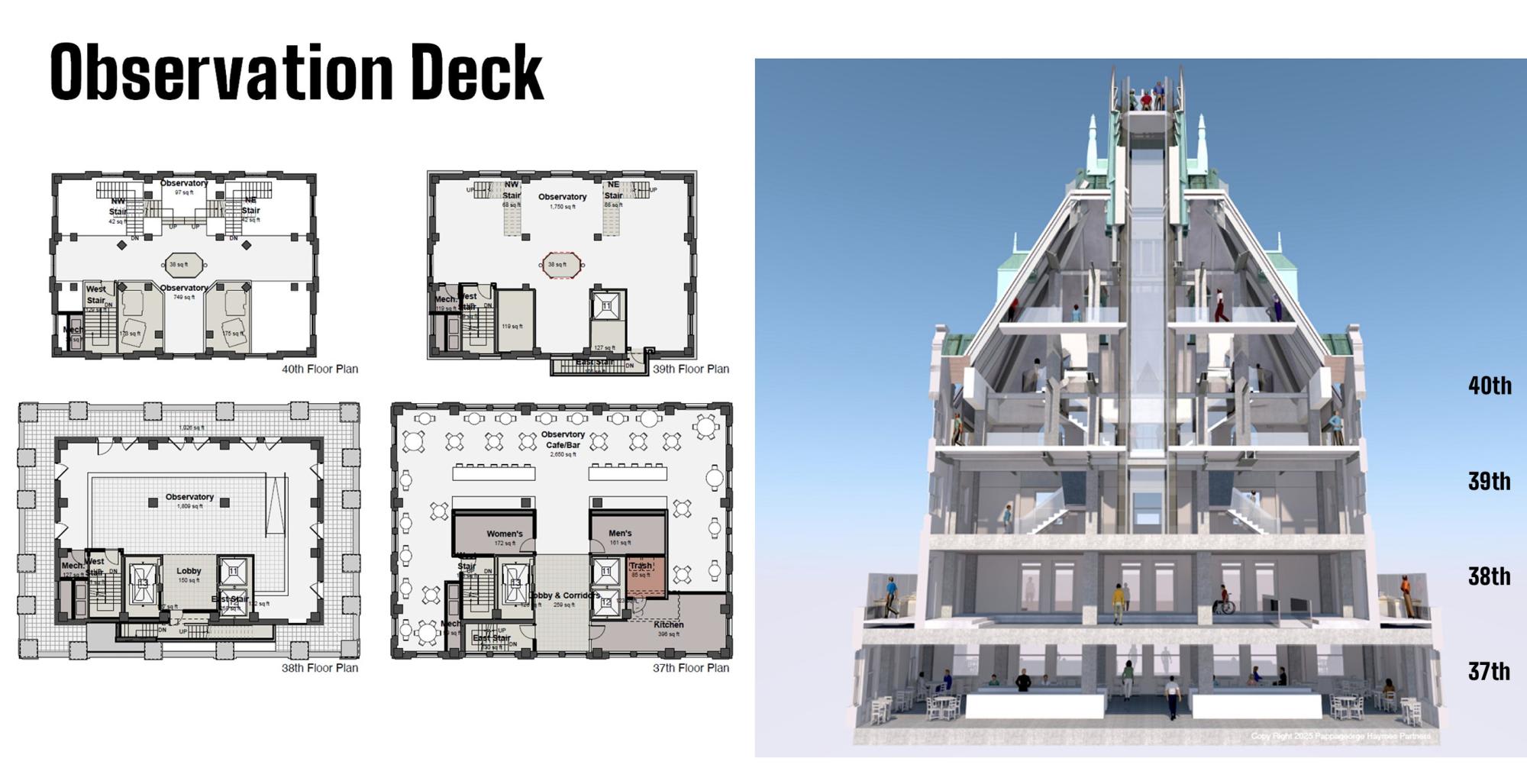
“At the top of the building, the uppermost four floors within the building’s crown will be converted into an observatory with multiple levels of viewing space, an outdoor terrace space, and a cafe/bar for visitors.
“To allow for the $160 million project, the developer is seeking to rezone from DR-10 to DX-16 with an overall Planned Development. With City Council approval secured, the site will be rezoned, and the developer can move forward with permitting and construction.” (Kugler, Urbanize Chicago, 10/6/25)
Preservation Chicago has long been concerned about the Pittsfield Building as it suffered through years of vacancy, legal complications, foreclosure, and deferred maintenance. We are thrilled to see the adaptive reuse effort led by Tom Liravongsa now under construction, and we have testified multiple times in support.
The Pittsfield Building was designed by Graham, Anderson, Probst & White, completed in 1927, and designated a Chicago Landmark in 2002. Its hybrid of Gothic and Art Deco detailing, its five-story interior atrium, and its terra cotta crown made it the tallest building in Chicago when it opened. The scaffolding that has stood at Washington and Wabash for roughly a decade is finally coming down for the right reason.
That this is described as one of the largest historic terra cotta restorations in the United States is worth pausing on. Terra cotta is the material that gives the Loop much of its character, and it is also the material most often cited as the reason a historic building supposedly cannot be saved. A restoration of this scale, on a building that spent years in foreclosure and litigation, is a direct answer to that argument.
The pursuit of National Historic Landmark status would be a significant further recognition. National Historic Landmark designation is the highest level of federal recognition, held by only a small number of Chicago buildings, and the Pittsfield Building merits consideration.
Preservation Chicago is particularly encouraged by the public dimension of the plan. Converting the uppermost four floors of the crown into an observatory with viewing levels, an outdoor terrace, and a café, along with the proposed museum, restaurants, and event spaces, will return this building to public life rather than closing it behind a residential lobby. Our landmarks should be the hardest working buildings in the city, and they should give something back to everyone, not only to those who live in them.
Preservation Chicago congratulates Tom Liravongsa, Pappageorge Haymes Partners, and the entire project team on an outstanding project.
Read the full story at Newsweek and Urbanize Chicago
- Historic 1920s Skyscraper To Change Forever in Milestone Transformation, Soo Kim, Newsweek, 9/2/26
- City Council approves Pittsfield Building redevelopment; 214 apartments and an observatory will be added at 55 E. Washington, Lukas Kugler, Urbanize Chicago, 10/6/25Plan To Convert Pittsfield Building Offices Into Apartments Gets City Council OK; The art deco skyscraper in the Loop will gain 214 apartments, an observation deck and a rooftop café while preserving historical details, Melody Mercado, Block Club Chicago, 9/25/25
- Chicago landmark Pittsfield Building went viral on TikTok. Meet the guy who made it happen; Tom Liravongsa — or as social media knows him, Tom the Skyscraper Guy — has racked up millions of views on videos about the 38-story tower that he purchased in 2023, Mariah Rush, Chicago Sun-Times, 5/30/25
- Investor pitches office-to-residential conversion for Pittsfield Building, Rachel Herzog, Crain’s Chicago Business, 3/11/25
- WIN: City Council Approves Pittsfield Building Renovation and Adaptive Reuse; Preservation Chicago, 10/2025
- THREATENED: Another Round of Lawsuits Delay Pittsfield Building Renovation; Preservation Chicago