



“A key city commission formally recommended an Edgewater historic district become a Chicago landmark while also denying a demolition permit in the district that would have made way for an apartment building.
“The Commission on Chicago Landmarks unanimously gave a final landmark recommendation for the Bryn Mawr Historic District during a hearing Thursday. The commission granted a preliminary recommendation in April, and held a public hearing on the matter in June.
“The commission found that the historic district met four out of seven criteria needed to be considered for landmark status: It’s a critical part of the city’s heritage, it has important architecture, it has works from important architects and it has a distinctive theme as a district. At a minimum, a potential landmark must meet two criteria.
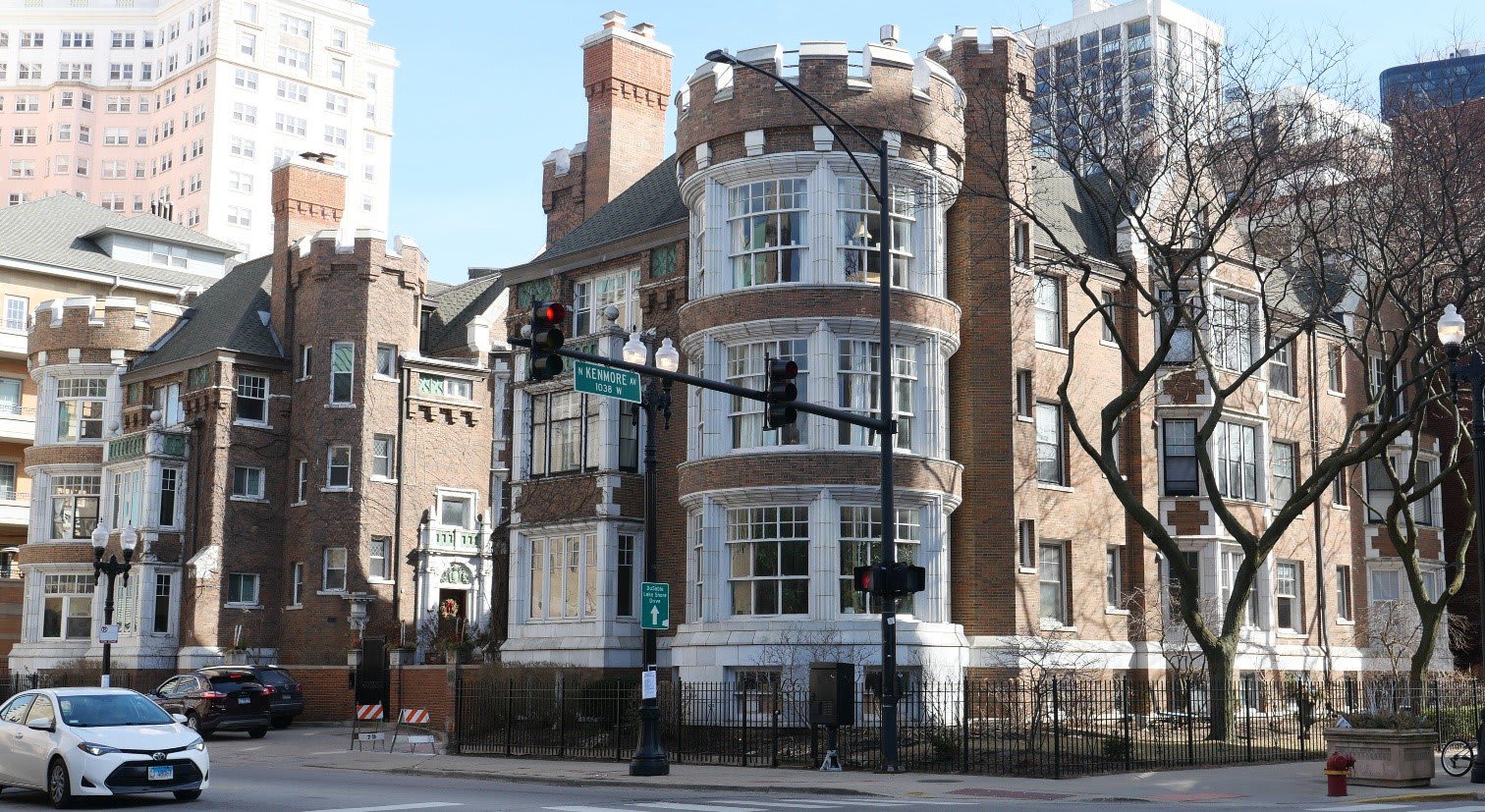
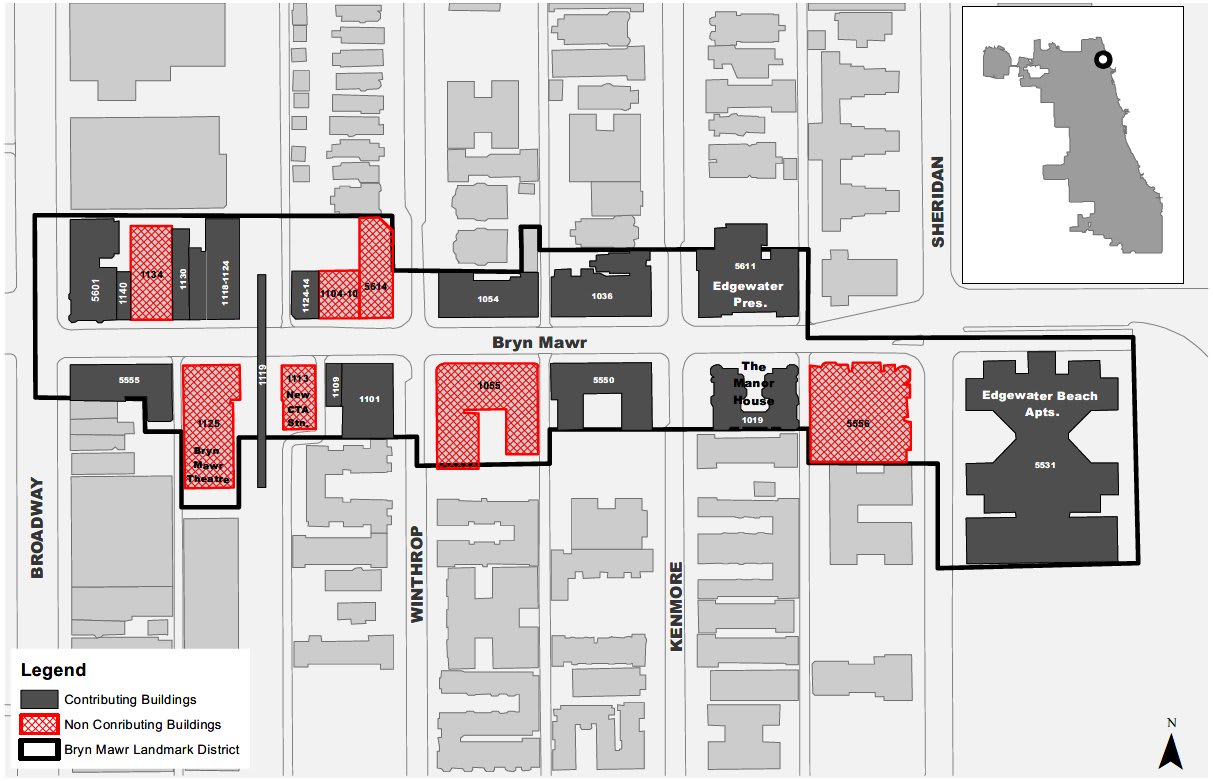
“The new landmark district — which is considered the first business district in the neighborhood — spans Bryn Mawr Avenue from Broadway to Sheridan Road, including notable buildings like the Edgewater Beach Apartments, 5555 N. Sheridan Road, and Belle Shore Apartment Hotel, 5550 N. Kenmore Ave.
“The Bryn Mawr Historic District is already on the National Register of Historic Places, but becoming a Chicago landmark opens it up to additional financial incentives and opportunities, like the Adopt-A-Landmark program, which makes grants available for restoration projects.
“The landmarking of the Bryn Mawr Historic District still needs a final approval from the City Council’s Committee on Zoning, Landmarks and Building Standards and the full council.
“Ald. Leni Manaa-Hoppenworth (48th), whose ward includes the historic district and who supports the landmarking, thanked city staff for continuing to usher this effort forward. Manaa-Hoppenworth also said this historic preservation effort ‘aligns with development and economic revitalization along this important historic commercial core of Edgewater.’
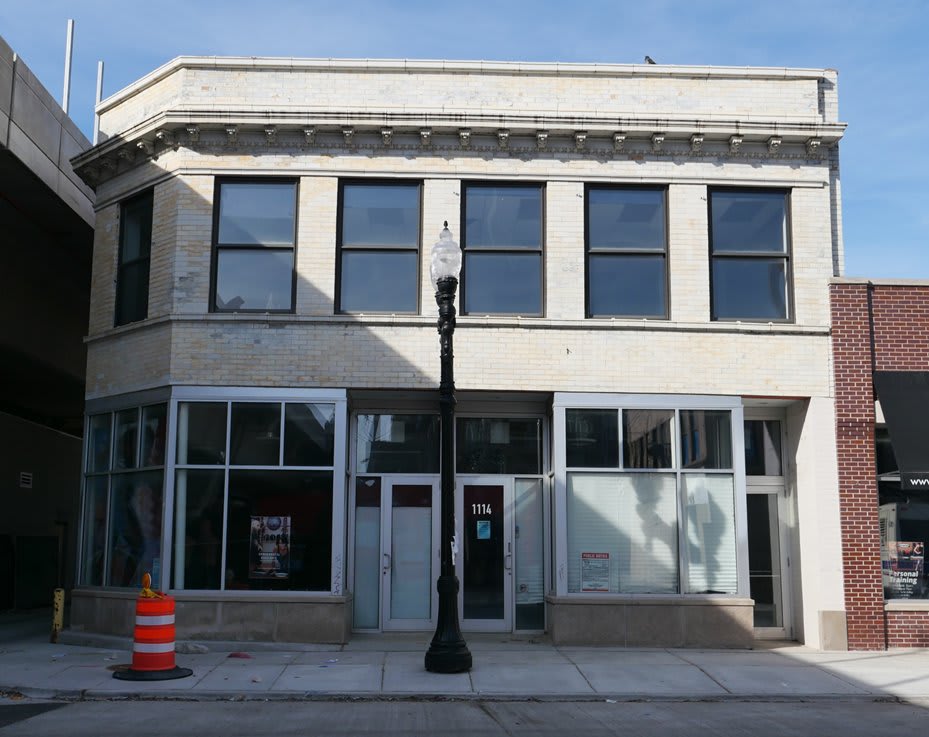
“During Thursday’s hearing, the landmarks commission — an arm of the city’s Department of Planning and Development — also denied a demolition permit for developer Harlem Irving Companies to knock down a building within the district at 1114 W. Bryn Mawr Ave.
“But the city considers the structure at 1114 W. Bryn Mawr Ave. a contributing building to the historic district because it displays elements of Classical Revival style. Demolishing this two-story brick building, built in 1909, would have an ‘adverse affect’ on the historic district because it contributes to the district’s historic elements, representatives with the Department of Planning and Development argued.
“The development team told the commission last month and again Thursday they’ve already spent $6 million on the proposed development site since they bought it in 2020. It wouldn’t be economically feasible for them to alter the project to exclude the 1114 W. Bryn Mawr Ave. site, and the project might not move forward without the demolition permit, they said.
“However, the commission stuck to its initial denial and gave a final denial of the demolition permit Thursday afternoon.
“Manaa-Hoppenworth said she encourages Harlem Irving Companies to work with the city to find a solution that would allow its crew to bring its development project to the site within the landmark status.” (Savedra, Block Club Chicago, 7/9/26)
Preservation Chicago is thrilled that the Bryn Mawr Historic District has received a unanimous final landmark recommendation from the Commission on Chicago Landmarks. This is a significant milestone for one of Edgewater’s most distinctive and intact streetscapes — a three-block corridor of Victorian era and Jazz Age buildings constructed between 1897 and 1929, and the neighborhood’s first business district.
Preservation Chicago worked closely for years with the Edgewater Historical Society, 48th Ward Ald. Manaa-Hoppenworth, and other stakeholders to make this Chicago Landmark District a reality. Special thanks to John Holden, LeRoy Blommaert, Thom Greene, Kathy Gemperly, Patricia Sharkey and Bob Reimer of the Edgewater Historical Society. We testified in support of the Bryn Mawr Historic District at the Commission on Chicago Landmarks hearings and will continue to advocate for the district until Final Landmark Designation is approved by Chicago City Council.
The Commission’s handling of the demolition permits has been careful and appropriately calibrated. It approved permits for the two non-contributing buildings at 5614 N. Winthrop Avenue and 1106 W. Bryn Mawr Avenue, both of which had lost their historic features through extensive alteration, while protecting 1114 W. Bryn Mawr Avenue, the 1909 Classical Revival building that contributes to the district’s character.
Preservation Chicago has proposed a facade retention compromise that remains a reasonable and workable path forward. This approach would incorporate the historic Classical Revival facade of 1114 W. Bryn Mawr into the new construction, allowing the Landmark District to advance intact while permitting Harlem Irving Companies to build its 95-unit development. This preservation-sensitive approach honors the building facade’s contribution to the streetscape while allowing the new construction to proceed. There are many successful examples of facade retention in Chicago.
We urge Harlem Irving Companies to work with the Commission on Chicago Landmarks, the Department of Planning and Development, Ald. Manaa-Hoppenworth, the Edgewater Historical Society, and community members toward this solution. Housing and historic preservation are not in conflict here — both can be achieved. The Bryn Mawr business corridor endured a great deal during the pandemic and the four-year Red Line reconstruction, and it is now experiencing a genuine renaissance. New housing and a protected historic streetscape will strengthen that recovery together.
The Bryn Mawr Historic District now advances to the City Council’s Committee on Zoning, Landmarks and Building Standards and then to the full City Council for Final Landmark Designation. Preservation Chicago will continue to advocate for the district through that final approval.