


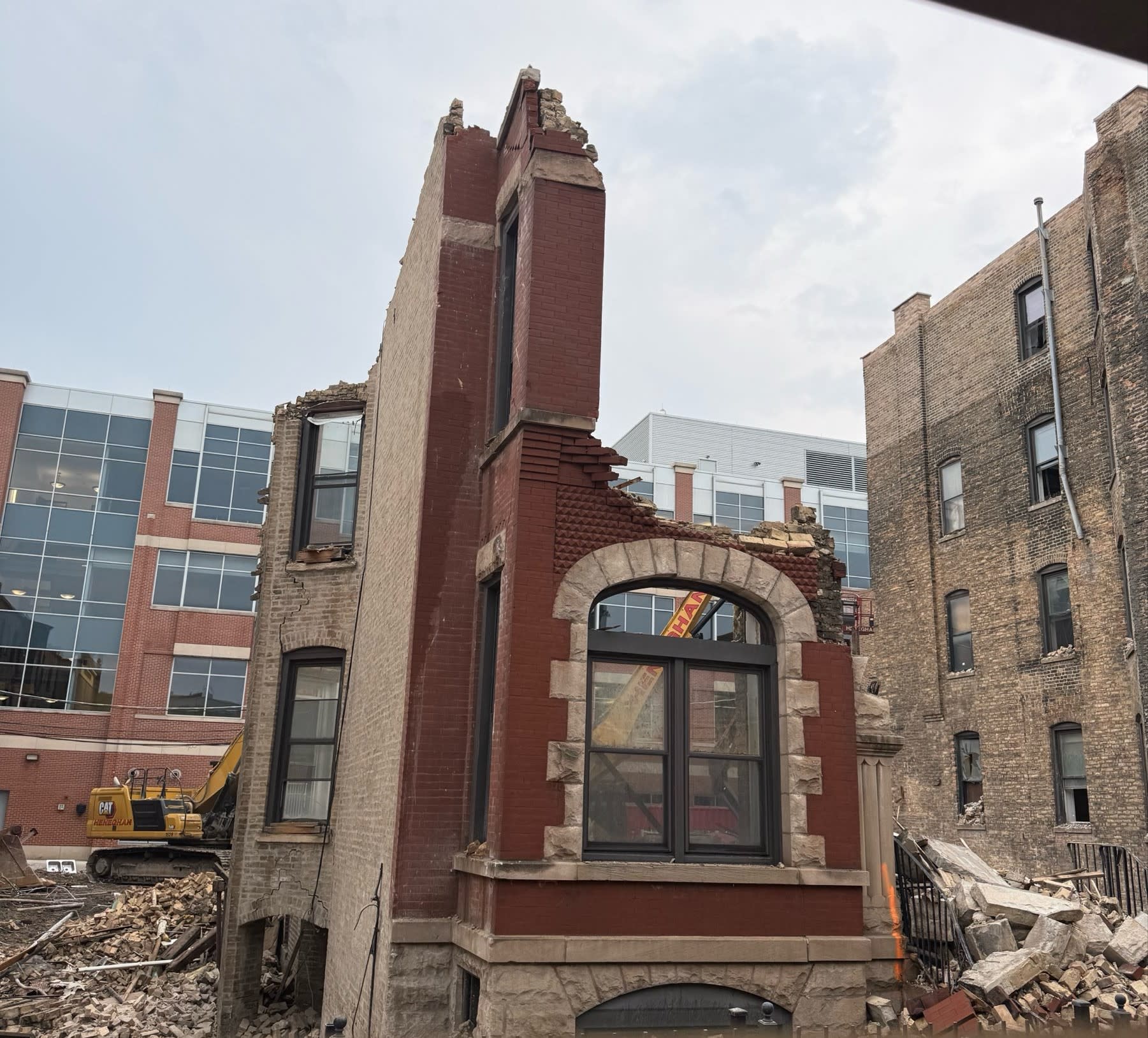

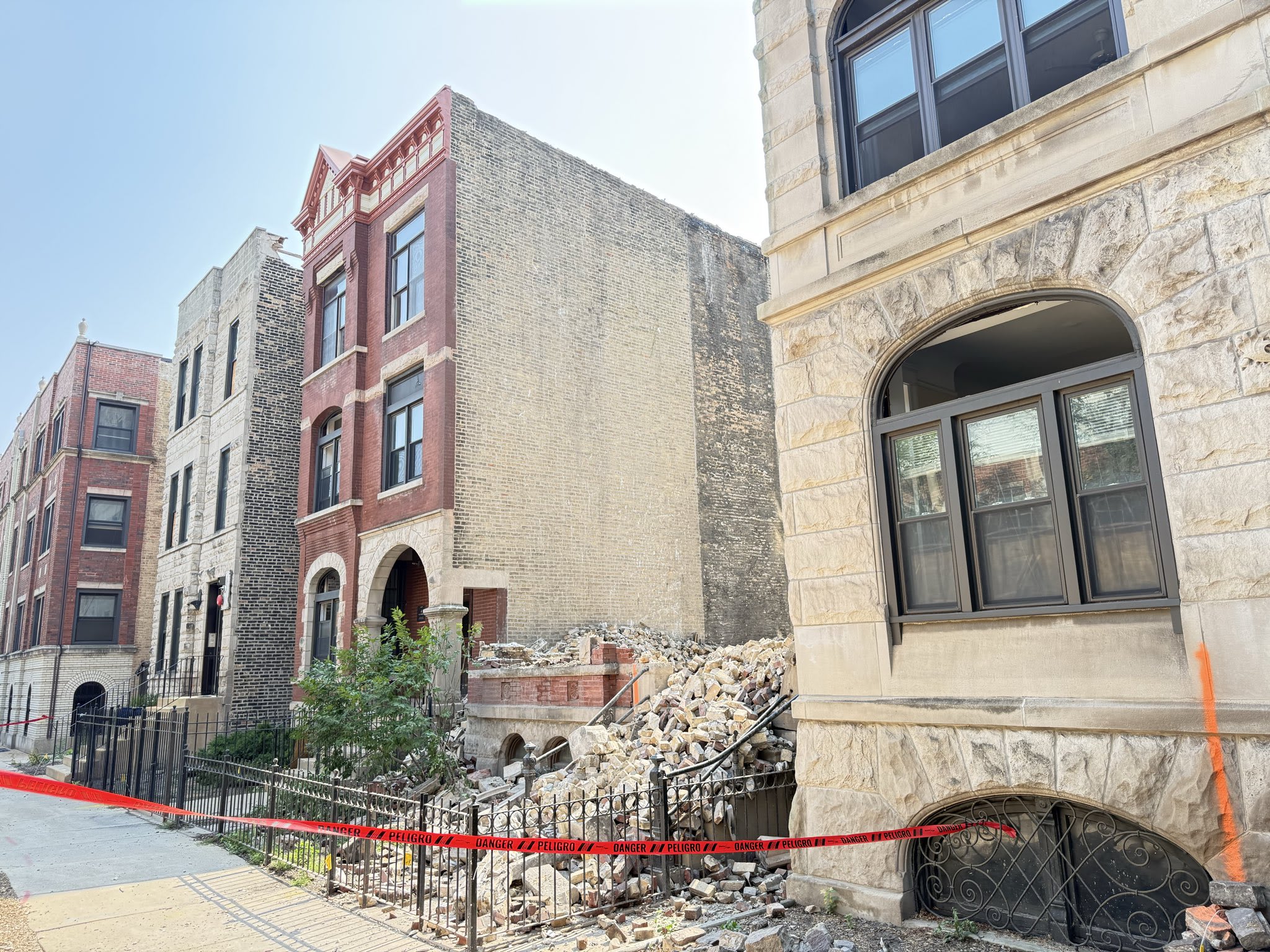

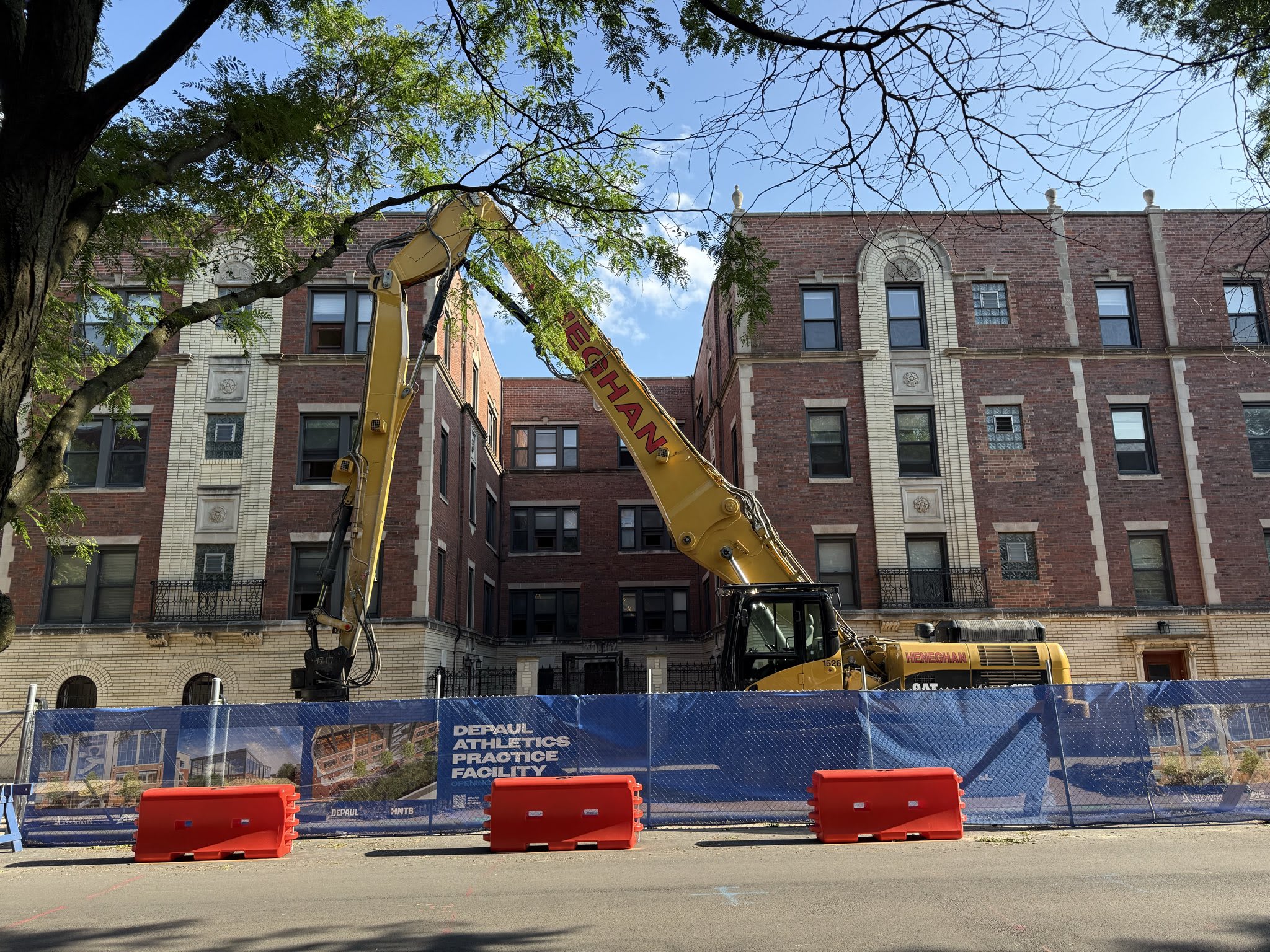
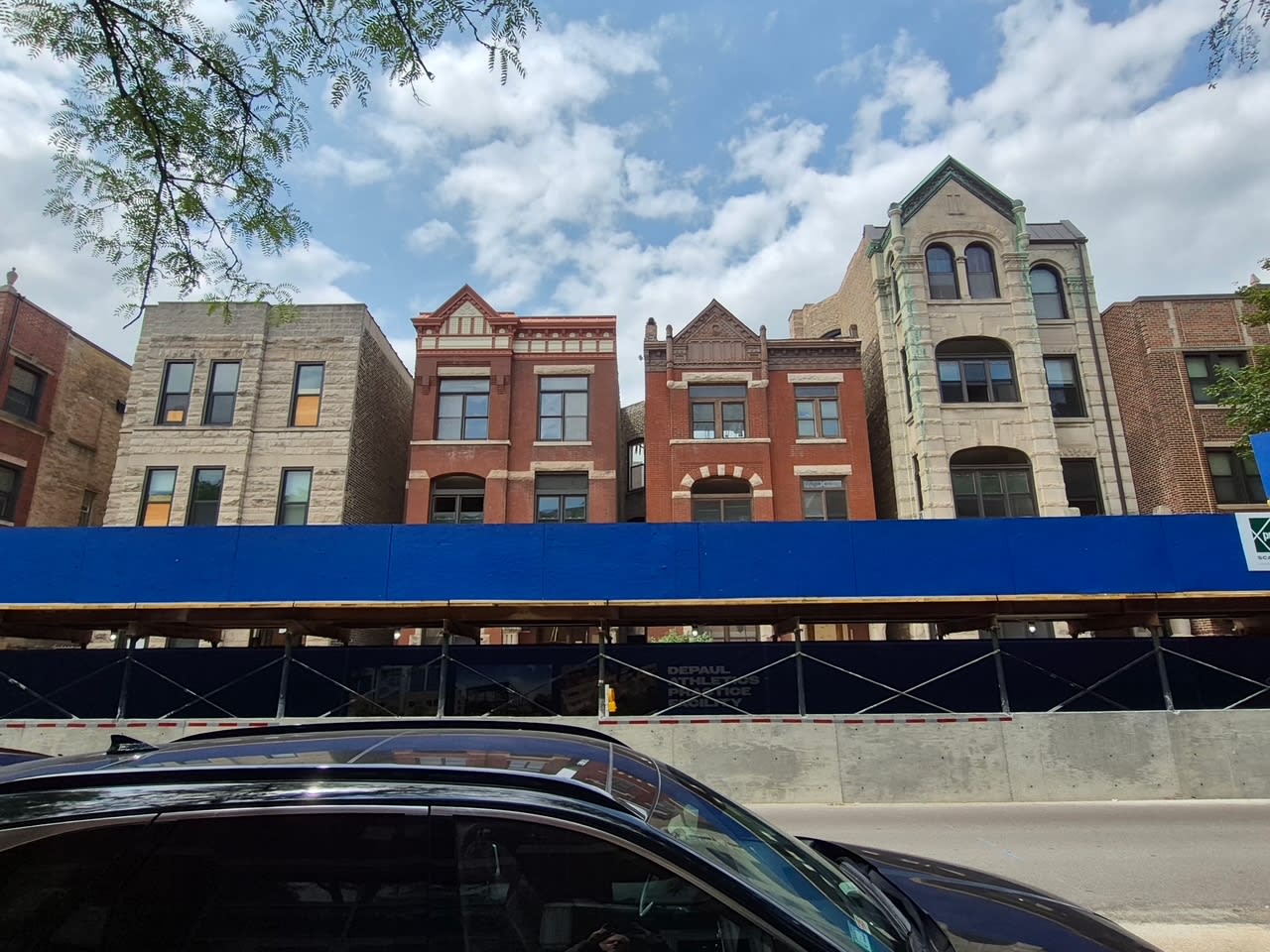
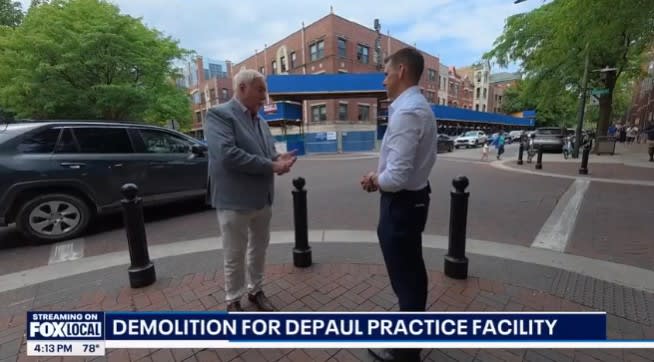
“Construction crews are demolishing a group of row homes and apartment buildings in Lincoln Park to make room for DePaul University’s new practice facility.
“But making room for the facility means demolishing historic row homes and apartment buildings that were mainly used for student housing. Ward Miller, executive director of Preservation Chicago, says the buildings should have been saved.
“‘We see this as the undermining of the community,’ he said.
“Miller says some of the buildings date back to the 1880s and 1890s. Two of them are rated as significant in the Chicago Historic Resources Survey, which was created after a decade-long effort to document the city’s historic buildings. He says the buildings are also part of the fabric of Lincoln Park’s history.
“‘We’re losing part of the fabric of Lincoln Park. And these buildings predate DePaul University’s founding,’ said Miller.
“Miller says Preservation Chicago suggested building the practice facility on a former grocery store site and a paved parking lot about a block north instead.
“‘Why not build there instead of demolishing these really beautiful buildings?’
“The demolition also means the loss of about 80 apartments and housing units, some of which were later used for student housing. Miller says that is especially concerning as Chicago continues to deal with a shortage of housing.
“‘We’re demolishing these buildings for a basketball practice and athletic facility. In our mind’s eye, that doesn’t seem to work with plans for our growing healthy neighborhoods.’
“Miller says the issue goes beyond one construction project. He says Lincoln Park is losing historic buildings throughout the neighborhood, particularly in areas without the stronger protections provided by a Chicago landmark district. He also says the demolition could eventually threaten the character of the Sheffield National Register District.
“Miller says the city and institutions should look for creative ways to build new facilities without destroying historic structures.
“‘Why are we demolishing historic fabric that makes our city special?’
“Miller also questioned whether DePaul could have found another location for the practice facility, especially given the university’s financial challenges and other recent changes, including the closure of its art museum and the sale of the Merle Reskin Theatre in the Loop.
“‘What is going to be left of the character of DePaul University and the Lincoln Park neighborhood in this particular vicinity?’” (Buganski, FOX 32 Chicago, 7/24/26)
“Demolition permits have already been issued for all of the existing buildings on the project site, allowing Heneghan Wrecking & Excavating to demolish all of the structures in preparation for new construction.” (Kugler, Urbanize Chicago, 8/12/26)
The Sheffield-Belden Group was a Preservation Chicago 2024 Chicago 7 Most Endangered. We advocated with urgency in close partnership with the community and preservation partners for more than two years to prevent this unnecessary demolition. These ornate stone and brick buildings which beautifully defined this block for over a century have been demolished.
What was lost was not a collection of individual buildings but an intact historic streetwall — four freestanding Romanesque Revival greystone townhouses and a well-scaled courtyard building at the corner, together forming half a block along Sheffield and Belden. All five were contributing structures in the Sheffield National Register Historic District. Two were orange-rated in the Chicago Historic Resources Survey.
Despite sustained opposition from neighborhood organizations, preservation advocates, and DePaul’s own students, the alderman approved the demolition.
DePaul chose to proceed with the demolition plan, despite Preservation Chicago repeatedly proposing multiple strong alternatives that would have allowed DePaul to build its new gym without demolishing these historic buildings. The surface parking lot one block away at Sheffield and Fullerton could have accommodated the gym facility and additional residential density could have been added above the new gym building.
DePaul closed its Art Museum in June and shuttered the landmarked Merle Reskin Theatre, Benjamin H. Marshall’s 1910 Beaux-Arts playhouse in the Loop, citing declining enrollment and financial pressure. Yet, as Lee Bey observed in his Chicago Sun-Times column, “For DePaul, money is tight. But tight is relative: The university managed to come up with enough scratch to start construction this year on a $42 million basketball and athletics center on its Lincoln Park campus.” (Bey, Chicago Sun-Times, 4/16/26)
We supported the Chicago Landmark Designation of Byrne Hall, 2219 N. Kenmore Avenue, and Cortelyou Commons, 2324 N. Fremont Street, significant historic buildings located on DePaul’s campus.
Given DePaul’s history of demolition, we remain concerned about other historic Lincoln Park properties near the campus that could one day be demolished for new construction projects, including St. Vincent de Paul Catholic Church and Rectory (1897) by architect James Egan, Sanctuary Hall (1883-1889), and several rowhouses at the southeast corner of Belden and Sheffield (1891) by Harold M. Hansen, all worthy of Chicago Landmark designation.
Read the full story at FOX 32 Chicago and Preservation Chicago
Sheffield-Belden Group; a Preservation Chicago 2024 Chicago 7 Most Endangered