



“After hiding in plain sight on the south lakefront for seven decades, carved stone fragments of a significant 19th century building by architect Louis Sullivan have burst into public view in recent days, thanks to photos taken by the architecture sleuth who documented them.
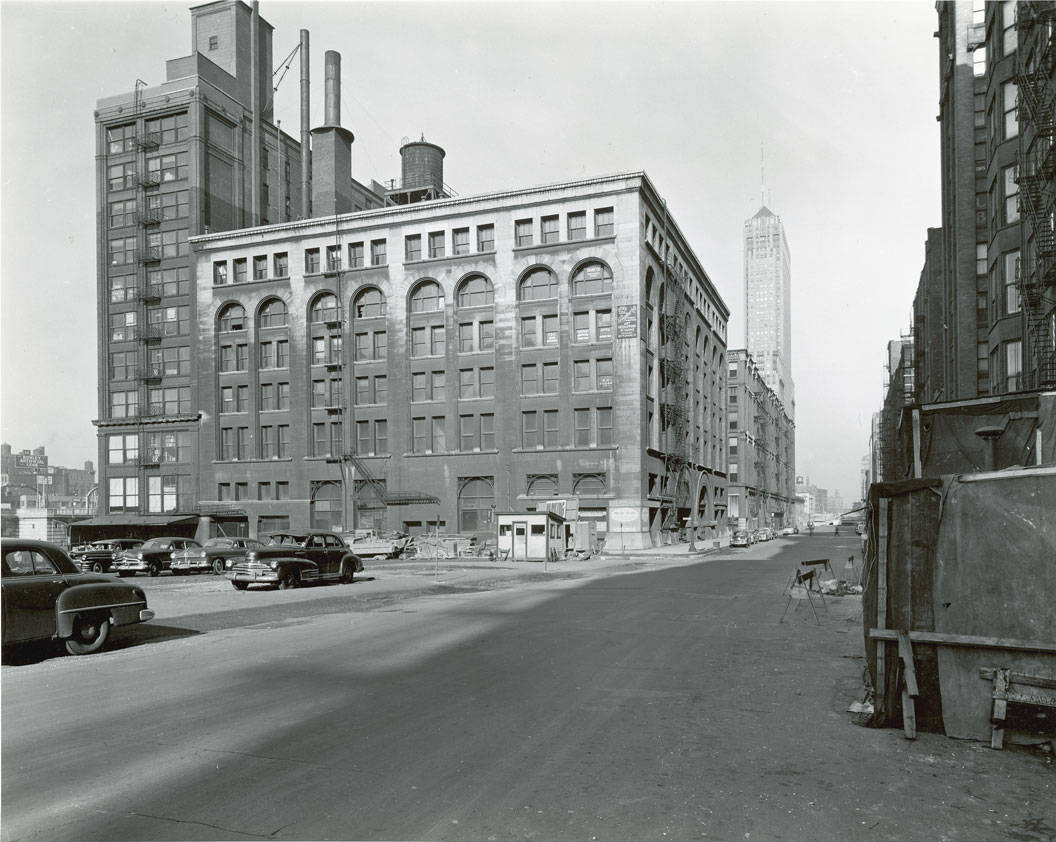
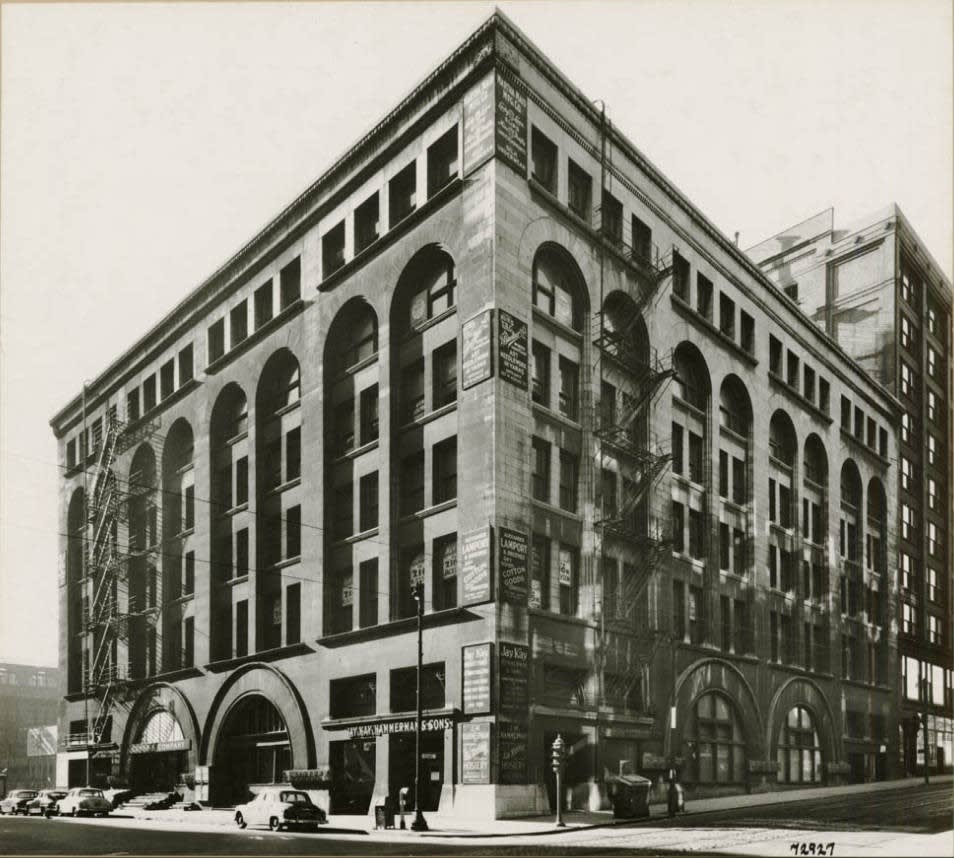
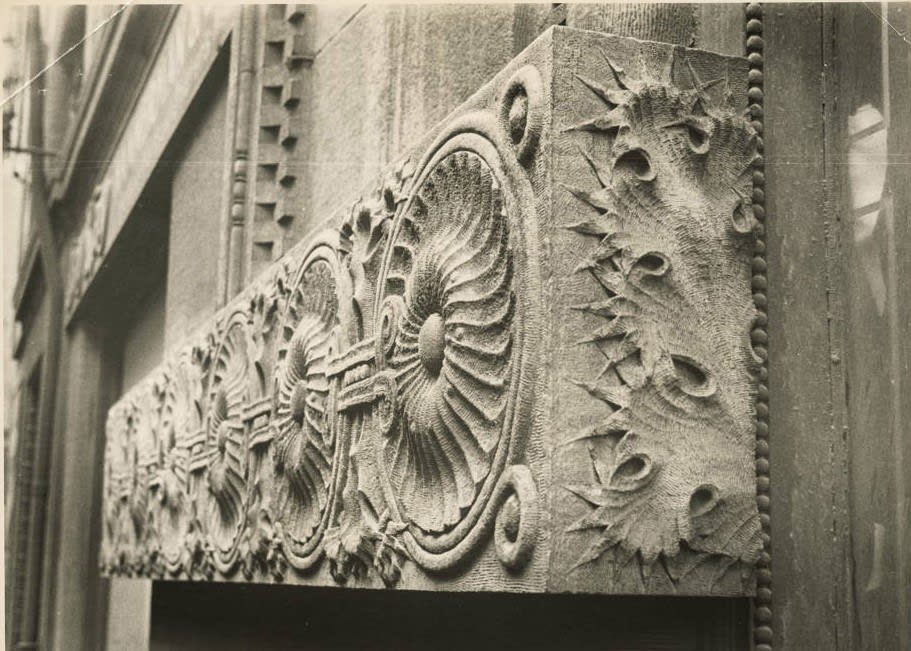
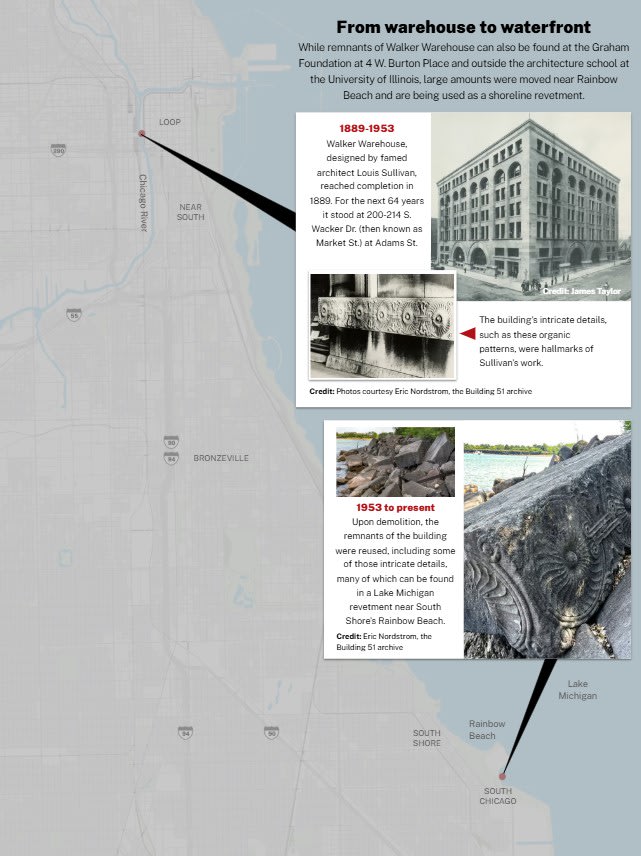
“Largely forgotten for decades, the scraps still show the botanical and geometrical patterns that Sullivan specified for the Walker Warehouse, built in 1889 across the street from where the Willis Tower stands now and demolished in 1953.
“While they aren’t protected from wind and waves, the fragments are safe from vandalism and graffiti because they’re behind a high security fence that guards one of the city’s lakefront water purification plants.
“‘It’s amazing, several tons of stone that was probably hauled away from (the demolition) on flatbed trucks in 1953 to Rainbow Beach and piled on the shore,’ said Eric Nordstrom. He’s a Chicago preservationist and architectural historian who salvages and documents historical architecture, and showcases objects at his museum and store called Urban Remains on Grand Avenue in West Town. Nordstrom photographed and documented the long-rumored remains at the urging of his partner, Jaime Szubart.
“Disused parts of buildings, roads and other heavyweight materials have been a part of Chicago’s shoreline since some of the debris from the Great Chicago Fire was shoved off into Lake Michigan. Little of it has the historical significance these scraps do, as some of the few remaining pieces of a building that one architectural historian considers the best work by Sullivan through that point in his career, when the architect was in his early 30s and still developing his influential ornamental style.
“Dankmar Adler and Louis Sullivan’s Walker Warehouse was completed the same year as their best-known Chicago building, the Auditorium Theatre, and a decade before the Sullivan’s spectacular State Street building that long housed the Carson Pirie & Scott department store.
“The Walker ‘was just a warehouse, but Louis Sullivan didn’t do ‘just a warehouse,” said James Clarke, the first person to spot the fragments. ‘He made things of art and beauty.’ Clarke spotted the fragments in 2018 when he was working on a landscape crew clearing brush around the Eugene Sawyer Water Purification Plant on the edge of Rainbow Beach Park.
“Clarke said he saw ‘some weird carvings that looked like hieroglyphics’ on some of the rubble in the shoreline riprap south of the plant, took some photos and, digging around later, found they matched a detail of the Walker Warehouse in the 1975 book Lost Chicago, a sort of guidebook for the city’s architectural historians.”
“Although they’re behind the water plant’s security fence, the fragments are on Chicago Park District land. ‘We’d be open to storing or displaying these for the public if a funding source could be identified,’ said Andrew Schneider, the Chicago Park District’s director of historic assets. (Rodkin, Crain’s Chicago Business, 6/29/26)
Read the full story at Crain’s Chicago Business
- “Pieces of long-lost Louis Sullivan building revealed on Chicago’s south lakefront, Dennis Rodkin, Crain’s Chicago Business, 6/29/26
- Artifacts Of Louis Sullivan Building, Demolished In The ’50s, Are Protecting South Shore’s Lakefront, Blocks of carved stone from the Walker Warehouse — early examples of Sullivan’s lauded ornamentation — have for decades served alongside other rubble as a lakefront revetment near Rainbow Beach, Maxwell Evans, Block Club Chicago, 7/8/26