


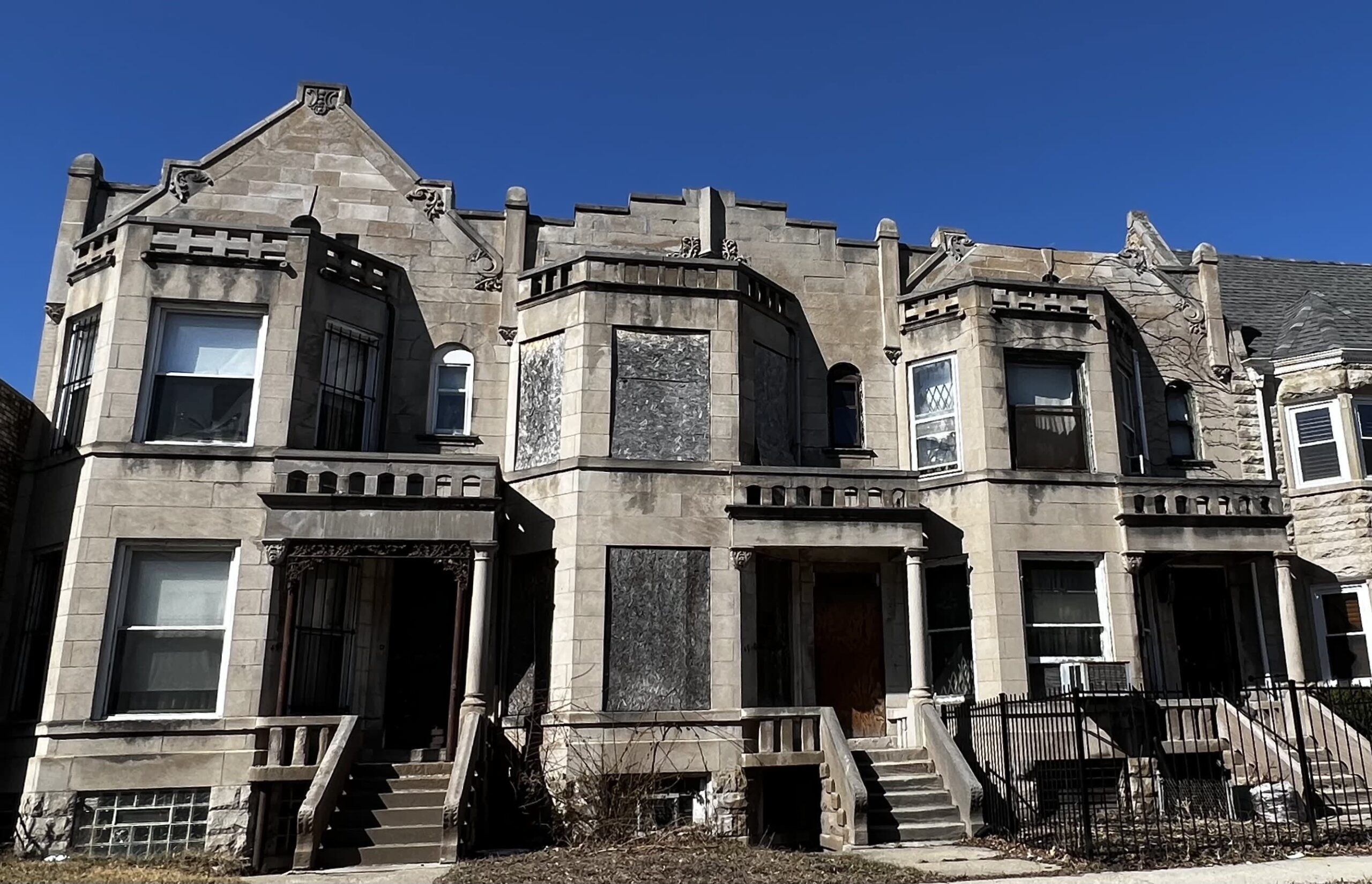

“Cook County has 38,765 severely tax-delinquent properties. But recent property tax reform offers a historic opportunity to transform them from symbols of disinvestment into catalysts of community development. Think of the housing, businesses, jobs, public investments and community wealth these properties can generate, all at a scale once unimaginable in many neighborhoods where they are concentrated. But to return them to productive and taxable use, we must have an adaptable redevelopment plan.
”Fortunately, Cook County has a proactive organization that’s been doing this work all along: Cook County Land Bank Authority, which I lead. We’ve been revitalizing properties the conventional market has left behind, clearing their barriers to redevelopment and connecting them with people who can put them back to productive use since our inception in 2013.
”These are abandoned houses, vacant lots, commercial buildings and industrial sites that sat for years, burdened by back taxes, title problems and other hurdles that make conventional redevelopment financially illogical. What looks like a neighborhood eyesore to many can still be the cornerstone of a family’s, company’s or community’s dream, so we are strategic about which properties to acquire and ready for redevelopment.
”Communities, nonprofits, businesses and developers also bring their vision to us for housing on empty lots, a business in a boarded-up storefront, or a larger development assembled from scattered parcels. We evaluate properties, proposed uses and organizations’ capacity and accept proposals that reflect the highest and best possible use.
”For example, we sold R.A.G.E., the Resident Association of Greater Englewood, a long-vacant restaurant on 59th Street for $35,000 in 2023. With a $2.5 million city grant, R.A.G.E. is transforming it into The Re-Up, a $6.4 million mixed-use development that will house its headquarters and Black-owned businesses, restaurants and other community assets; anchor a commercial corridor; and create jobs.
”For good reason: land banks can do what the conventional market often can’t by eliminating back taxes, penalties and title problems that can make redevelopment financially impossible. By moving qualifying properties through the tax-deed process, we create a path for private or nonprofit development redevelopment projects.
”But nearly 40,000 distressed properties require us to think beyond one parcel at a time. We typically hold and inventory about 2,000 properties, costing roughly $6 million annually as we preserve them for redevelopment. So, we increasingly work with partners to assemble properties into developable sites. One parcel may belong to the City of Chicago, the next to CCLBA and another may be severely tax delinquent.
”Developers and communities do not see separate bureaucratic categories. They see one block. Working with the Chicago Department of Planning and Development and other partners, we can assemble parcels around housing, transit, commercial corridors, schools and community anchors to unlock development that would otherwise be impossible.
”For example, in Roseland we provided 46 parcels to the Hope Center Foundation to support affordable housing and neighborhood revitalization. Our Equity Fund, which provides purchase assistance equal to 6% of the purchase price, up to $20,000, was also available to eligible homebuyers. By requiring buyers to remain in the residence for three years, it also promotes sustained homeownership, not gentrification. Getting people in homes stabilizes communities.
”A third-party analysis of CCLBA’s first decade found it generated more than $1.8 billion in direct and indirect economic impact across Cook County and increased and stabilized nearby property values. Such robust community wealth creation proves these viable properties are transformative resources, and underscores why we must continue to match them with the right partners, clear barriers that keep them frozen and assemble land to scale to change what is possible.” (Caffrey, Crain’s Chicago Business, 8/31/26)
Preservation Chicago views the Cook County Land Bank Authority as one of the most effective instruments available for returning historic buildings to use in disinvested neighborhoods. Back taxes and clouded title are the two barriers that most often doom a vacant historic building, and the Land Bank is uniquely able to clear both.
Vacant lots present a significant challenge to neighborhoods working to recover from decades of disinvestment. Preservation Chicago encourages a heightened focus to prevent the creation of new vacant lots.
Transforming blighted vacant residential homes, two-flats, three-flats and corner buildings into vibrant neighborhood stabilization anchors should be a top priority. These vacant homes should be quickly transferred to developers and neighborhood organizations committed to restoring and reactivating them.
A restored building can become the beachhead around which neighborhood reinvestment occurs. There are many parties interested in renovating these homes, but because of the challenges tied to title and back taxes, the buildings rarely reach the market and instead languish until they are emergency demolished using taxpayer dollars. This is precisely the barrier the Land Bank is well equipped to resolve.
Read the full story at Crain’s Chicago Business
- Opinion: The properties nobody wants could help rebuild Cook County neighborhoods, Jessica Caffrey, Cook County Land Bank Authority, Crain’s Chicago Business, 8/31/26
- Cook County Land Bank Authority 10-Year Impact Report, 9/20/24
- Cook County Land Bank Authority
- WIN: Spared From Demolition, Washington Park National Bank Plan Now Includes Façade Preservation! (Chicago 7 2016 & 2020); Preservation Chicago
- THREATENED: Cook County Land Bank Chooses Proposal to Demolish Washington Park National Bank Building But Alderman Objects (Chicago 7 2016); Preservation Chicago
- Washington Park National Bank; a Preservation Chicago 2016 and 2020 Chicago 7 Most Endangered