


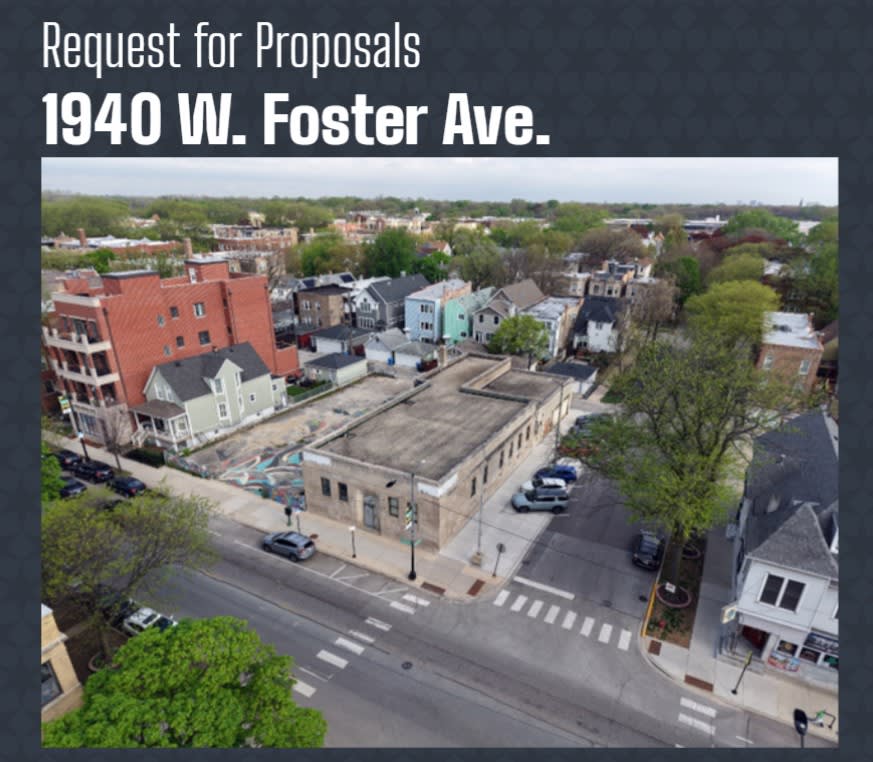

“The City of Chicago is seeking applications from development teams to redevelop an approximately 13,500 square-foot City-owned property at 1940 W. Foster Ave. in Lincoln Square, a high-visibility location close to Winnemac Park, the Andersonville Clark Street commercial corridor and nearby Ravenswood Metra and Damen CTA Brown Line stations.
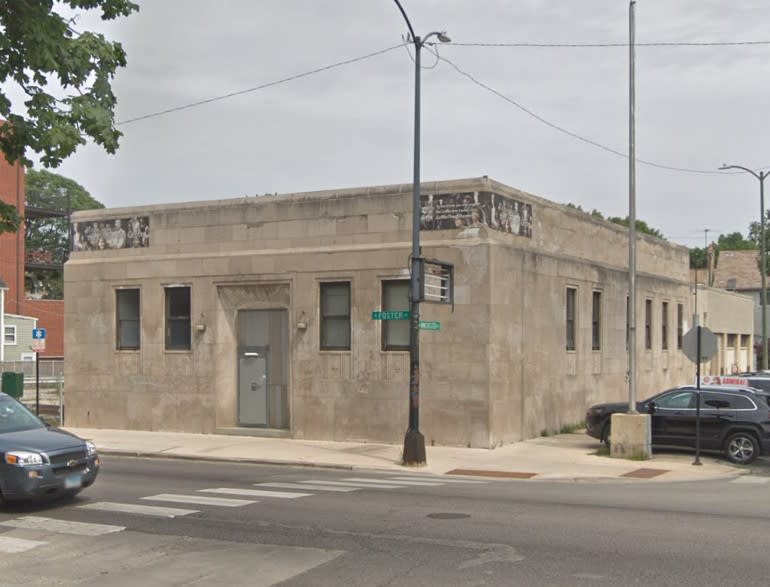
“Approximately half of the site area is currently occupied by a former police station building built in 1936 in an art deco style. The building is built near the sidewalk on W. Foster Ave. and N. Winchester Ave. and has access from three sides, including the rear alley.
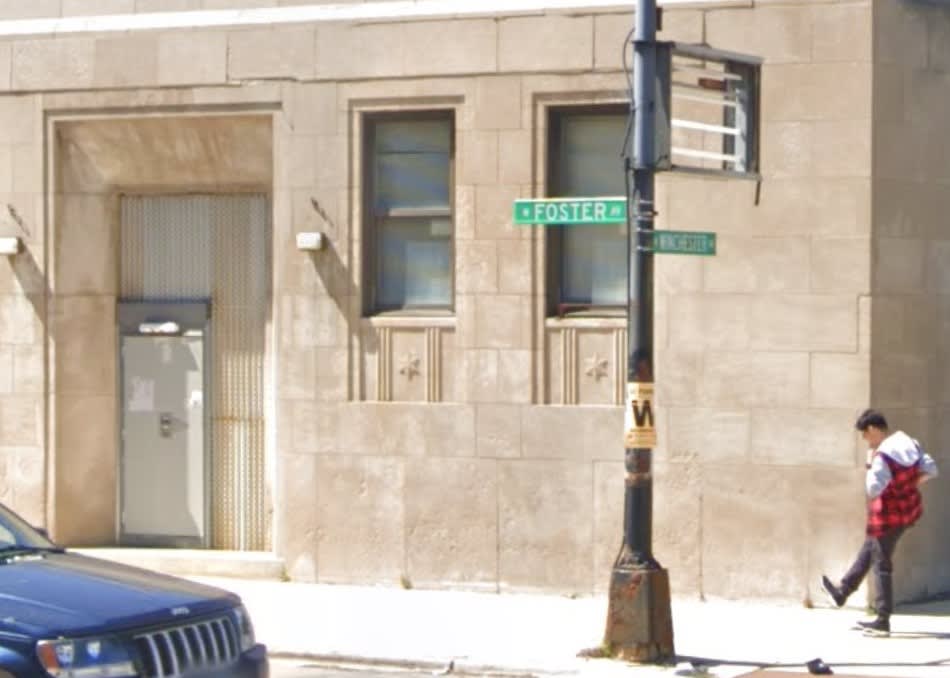
“It is a brick structure with a limestone façade and has been unoccupied since 2002. As such, the building shows signs of neglect and lack of maintenance such as broken window glass and façade wear.
“The City anticipates a likely demolition of the existing structure and redevelopment of the site by the selected buyer to build a residential or mixed-use project.
“The City anticipates redevelopment of this property to include residential uses of at least 15 units with or without ground floor commercial included. A successful proposal will complement the surrounding context in terms of uses and design.
“Applications must be submitted through the City’s ChiBlockBuilder.com land sale portal by 11:59 p.m. September 8, 2026.” (Department of Planning and Development, City of Chicago, 6/8/26)
The Foster Avenue police station belongs to a significant and identifiable family of civic buildings. Architectural historian Jacob Kaplan of Forgotten Chicago describes their origin and character:
“In the mid-1930s, Chicago switched to a new plan for police stations. Designed by city architect Paul Gerhardt, Jr., these are more horizontally compact on the facade and deeper on the lot than earlier stations. Ornamentally austere compared to their older brothers, these stations feature heavy use of Indiana limestone. Included were such innovations as a ‘quiz room’ for giving perps the third degree, as well as a garage with space for a patrol and two squad cars. They were financed with the help of PWA funds from the federal government.
“This archetypical example on Foster just east of Damen was abandoned a few years ago for a new station on the ‘Motel Row’ stretch of Lincoln Avenue. Formerly home to the 40th District, this station was the namesake of the Summerdale Scandals in 1960.” (Kaplan, Forgotten Chicago)
Preservation Chicago is amplifying this Request for Proposals for the former Chicago Police Station, built in 1936, by architect Paul Gerhardt, Jr. and located at 1940 W. Foster Ave. in Lincoln Square with hopes of attracting a preservation-oriented developer who will retain and reuse the historic building — or at minimum incorporate its limestone facade into the new construction.
The City’s RFP frankly anticipates “a likely demolition of the existing structure.” This is unfortunate.
The building has been vacant since 2002, and a prior attempt at adaptive reuse — one that came remarkably close — ultimately fell short. In January 2011, after six years of negotiations with Ald. Patrick O’Connor (40th Ward), Griffin Theatre purchased the building from the City for $1 with a fully developed plan to transform it into the Griffin Arts Center. The project was designed in two phases by John Morris, the celebrated theater architect behind both the Steppenwolf Theatre and the Lookingglass Theatre: an 80-seat black box theatre to open in fall 2012, followed by a 120-seat main-stage theatre by 2015.
Despite the $1 purchase price, a distinguished architect, aldermanic support, and years of planning, the project was unable to advance to construction. The building reverted to the City, and now it returns to the market. The challenges are real — twenty-four years of vacancy, deferred maintenance, broken windows, a deteriorated envelope. But none of those challenges require demolition. They require a developer with the right combination of preservation commitment, construction expertise, and financing creativity.
The building at 1940 W. Foster is not merely a vacant civic relic. It is an “archetypical example” of the Paul Gerhardt, Jr. police station typology that Chicago built across its neighborhoods in the mid-1930s with Public Works Administration funds: Indiana limestone facades, brick construction, Art Deco proportions scaled to the sidewalk and the street. These buildings were designed to be good neighbors, and on a corner lot a block from Winnemac Park, within walking distance of the Andersonville commercial corridor and steps from Foster Avenue’s own neighborhood-serving street life. This building has the potential to be a good neighbor again.
Across Chicago and nationally, there are many successful examples of vintage civic buildings, including firehouses, police stations, schools, post offices, which have been successfully incorporated into high-density residential developments in ways that both honor the original historic fabric while achieving the density and housing goals that helps communities to grow and thrive. Facade retention, interior adaptive reuse, and sensitive additions that step back from the historic structure are all proven strategies. The City’s own RFP notes that the corner location, transit access, and market demand in Lincoln Square support a viable residential project. The presence of a 1936 Art Deco limestone building on that corner is not an obstacle, but a strong asset that should be embraced.
Its also noteworthy that the City’s Neighborhood Design Guidelines and the RFP’s own urban design principles call for proposals that “complement the surrounding context in terms of uses and design.” A project that incorporates, celebrates, and revitalizes a 90-year-old civic historic building is much more complementary to the context than a new construction building that demolishes it and erases the past.
Preservation Chicago urges preservation-oriented developers to review the RFP and submit a proposal by September 8, 2026. The deadline for questions is August 7. A pre-submission webinar was held June 17 and the recording is available on the CBB RFP website.
We also urge the City of Chicago to reconsider the language in this and future RFPs that frames demolition as the anticipated default. Historic reuse should be prioritized by Chicago RFPs. The City’s Adopt-a-Landmark program, Historic Tax Credit eligibility, TIF, and the Commission on Chicago Landmarks all exist to help developers protect exactly this kind of building.