


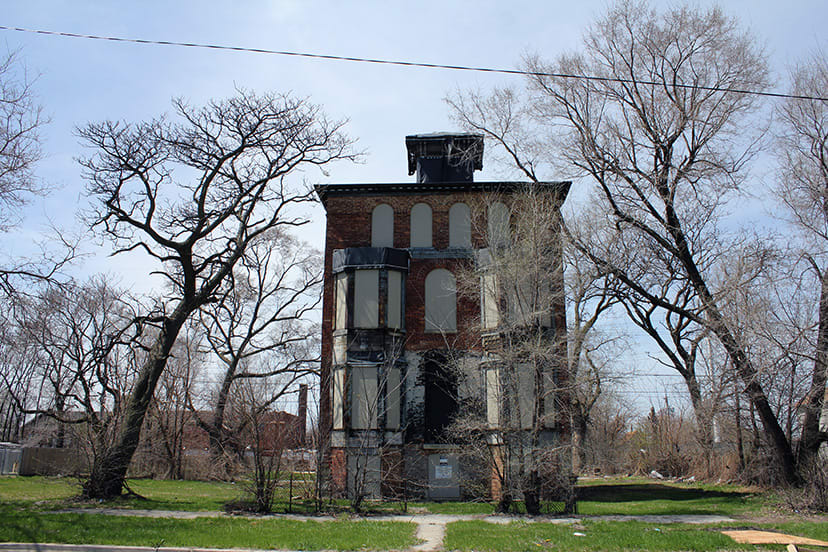

“The old John Raber House was landmarked in 1996 and not without good reason: The 156-year-old Washington Park neighborhood residence is a surviving example of the 19th century country estate homes that once occupied the mid-South Side.
“Plus, the house was vacant, dilapidated and sitting in a corner of the neighborhood that had been eroded by demolition. So the city acquiring the building and protecting it from being wrecked were solid steps that would lead to the home’s — and the area’s — turnaround.
“Thirty years later, the Raber House, 5760 S. Lafayette Ave., still sits weathered and empty. And it could remain that way for a while. The city has outlined no clear plans for the building.
“The Raber House deserves better, and so does the Washington Park neighborhood, where signs of a rebound include an arts corridor — albeit University of Chicago-led — on Garfield Boulevard west of King Drive, about a mile east of the Raber.
“The house should be a plus and not a pall for Washington Park. It’s time for the city to take the lead in finding a new use for this landmark.
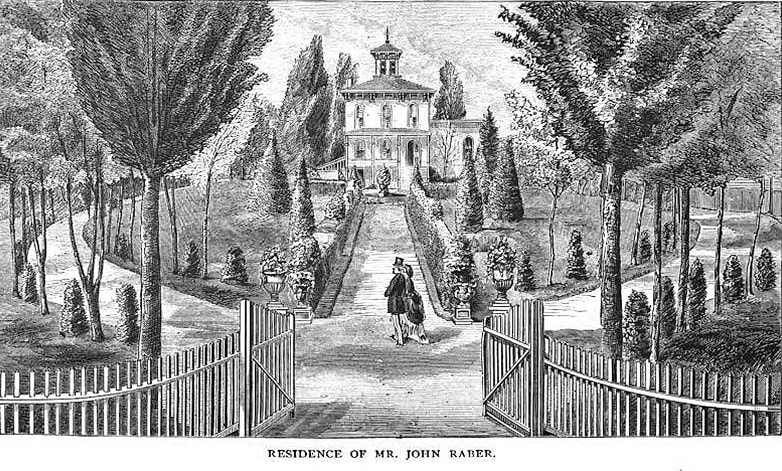
“The Raber is a substantial-looking 1870 Italianate-styled home with two-story bay windows flanking the main entrance and topped by a cupola with a hipped roof. The house looked as if it were straight out of a seaside New England town.
“In the 1874 book “Chicago and its Suburbs,” author Everett Chamberlin said the Raber had “finely graveled walks and drives bordered with beautiful arbor vitae hedges. Miniature lakes filled with gold-fishes, and other pleasing features are to be met at every hand.”
“By the 1890s, the area — like much of Chicago — turned into a boom town with industry and workers. The Raber’s large grounds were subdivided for new homes and streets, and the home became just another house in the block. It was converted into a six-flat in 1894.
“When disinvestment in Washington Park began hitting hard, starting in the 1970s, scores of homes and buildings built in the neighborhood between the 1890s and 1930s started falling to demolition. By the time the Raber was landmarked in the 1990s, it was surrounded by land once more.
“The Raber’s value isn’t in what it was then, but in what it must become now, in order to serve the folks of Washington Park and the South Side. That means the city and stakeholders must work together to investigate and unlock potential new uses for the Raber.
“Hard work, yes. But it’s better than city government just waiting around for a developer to serve up a deal that could be years away and no doubt require taxpayer subsidy — as is too common a practice in this town.
“To its credit, the city has done some minor work on the Raber over the past decade to keep the house somewhat weathertight, so it doesn’t wind up falling in on itself. But the house won’t be truly saved until it’s restored and operational.” (Bey, Chicago Sun-Times, 5/23/26)
Read the full story at Chicago Sun-Times
- What should we do with the sunken Raber? Landmark home faces uncertain future, Thirty years after being landmarked, the Raber House still sits weathered and empty, and could remain that way for a while. The city has outlined no clear plans for the building, Lee Bey, Chicago Sun-Times, 5/23/26
- Our Raber (House) Has Tender Grapes; Can a vineyard estate save an abandoned landmark? Lynn Becker, Architecture Chicago Plus Blog, 4/25/11
- John Raber House Chicago Landmark Designation