


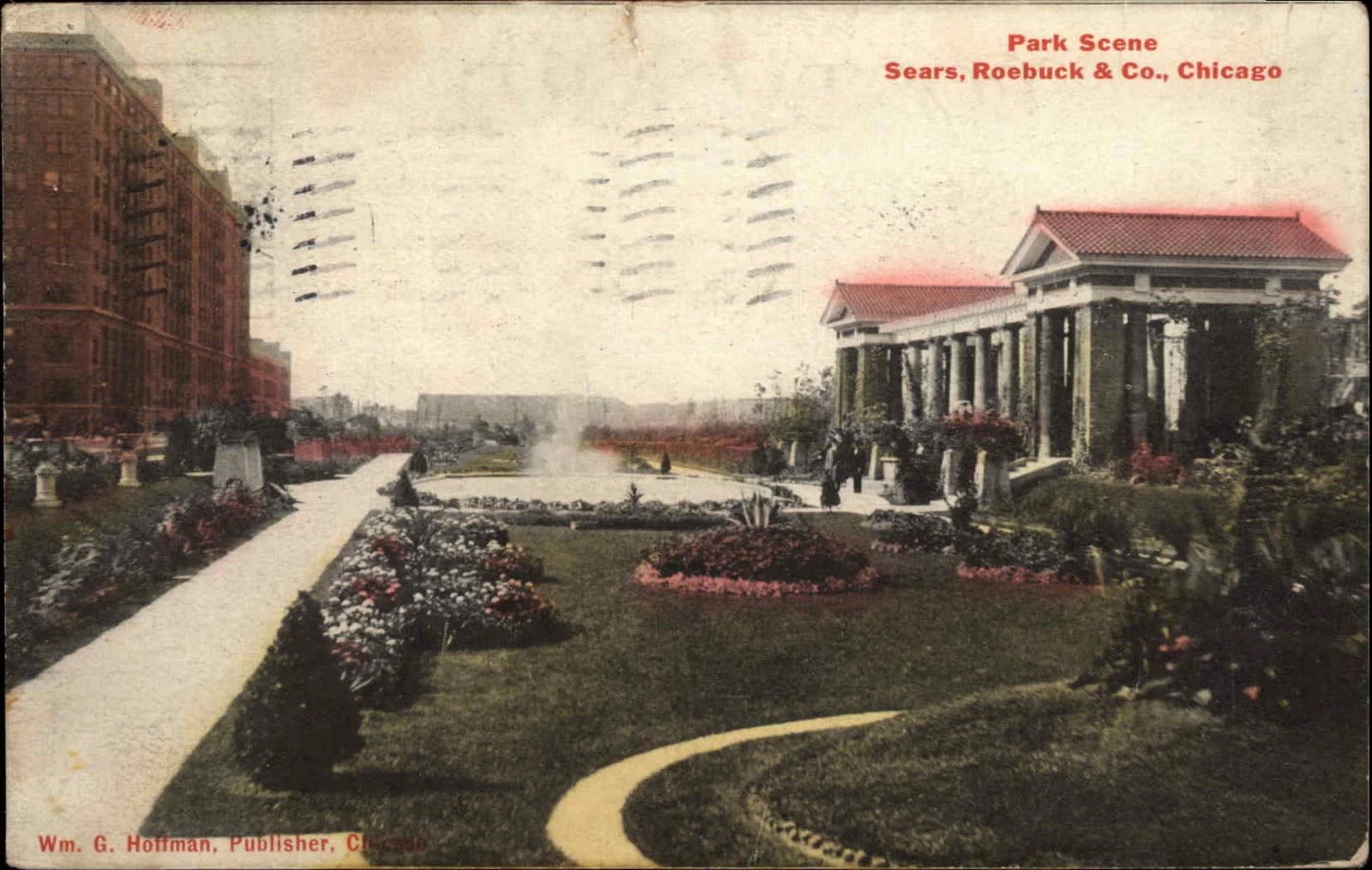

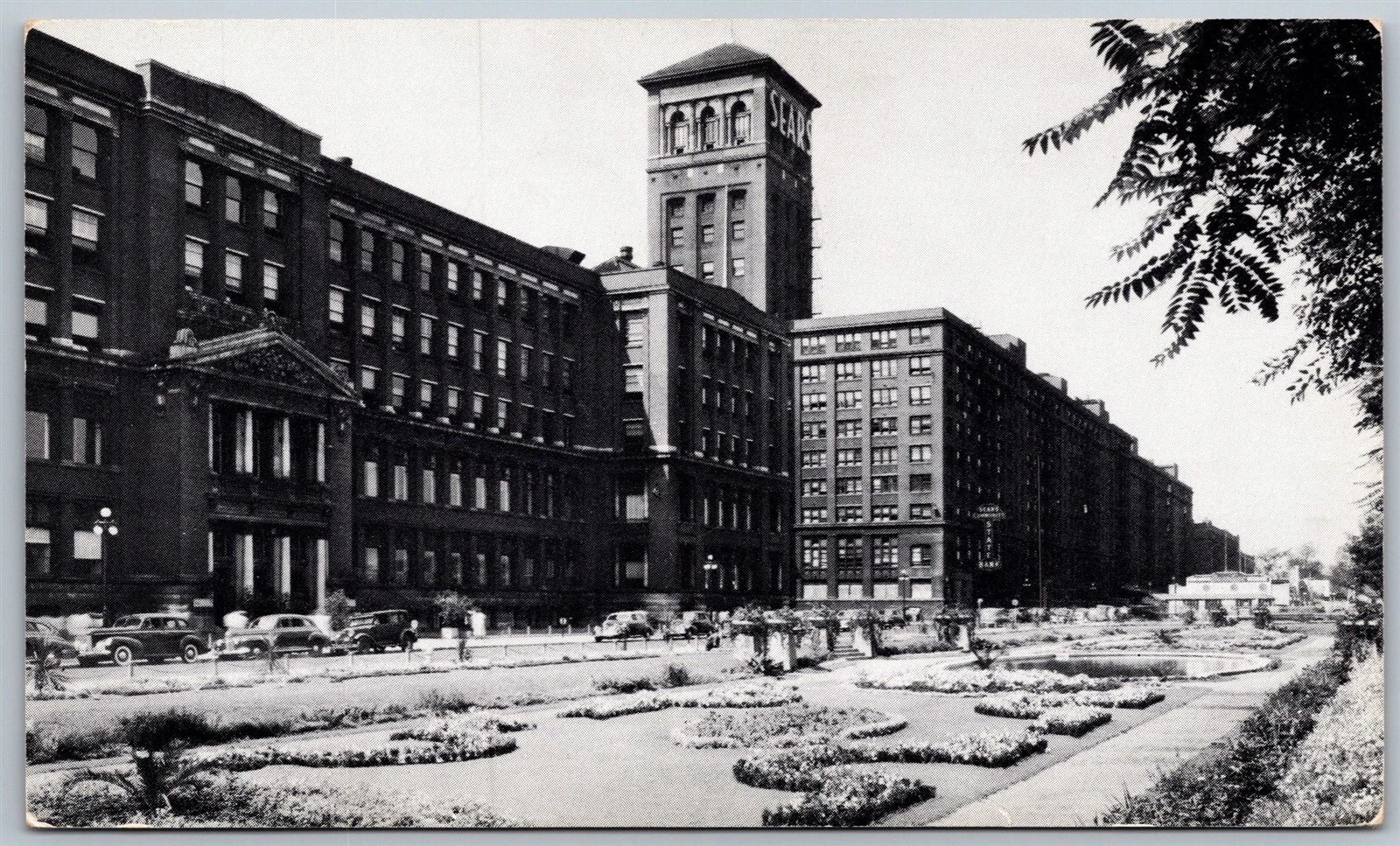
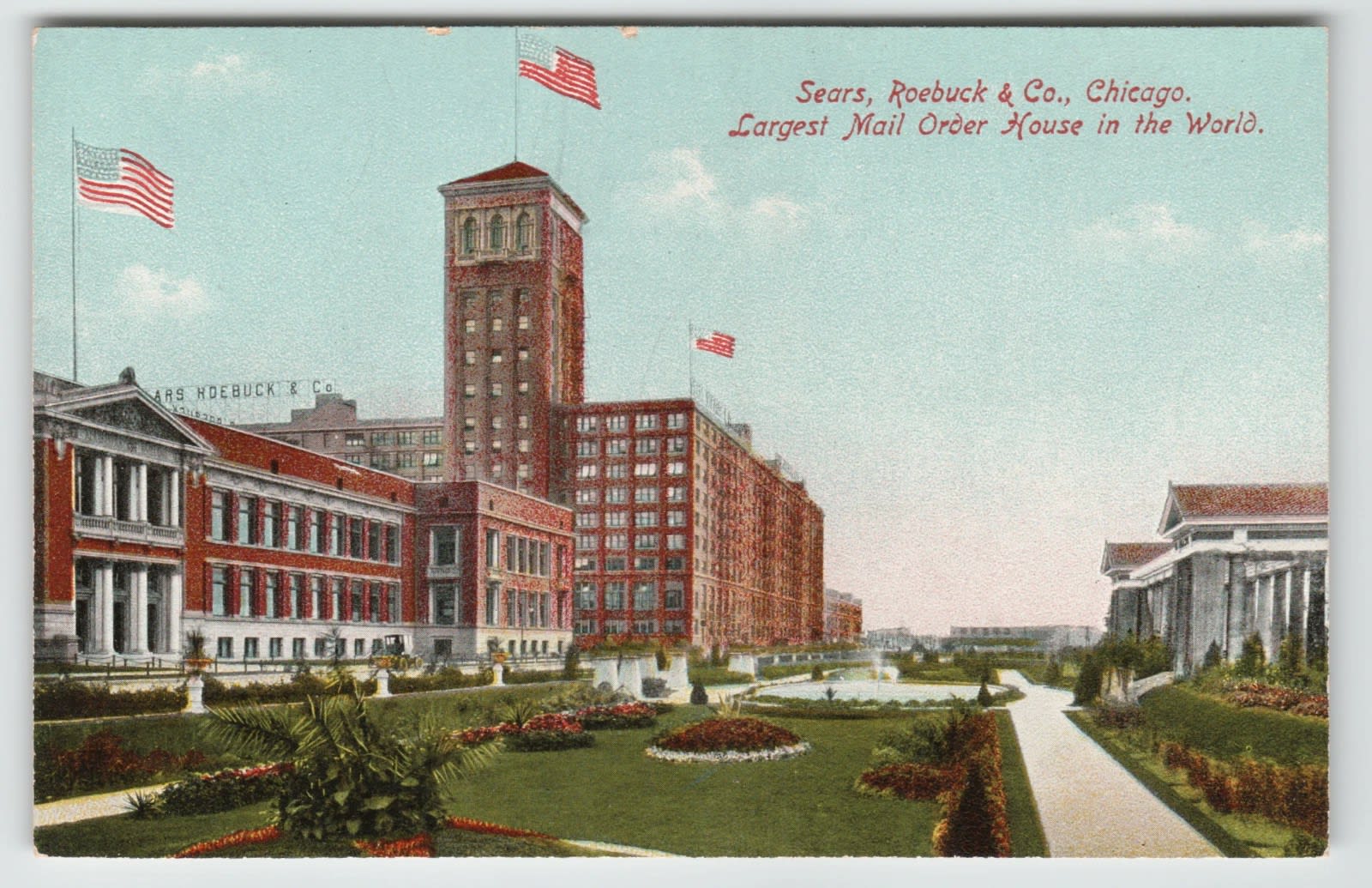
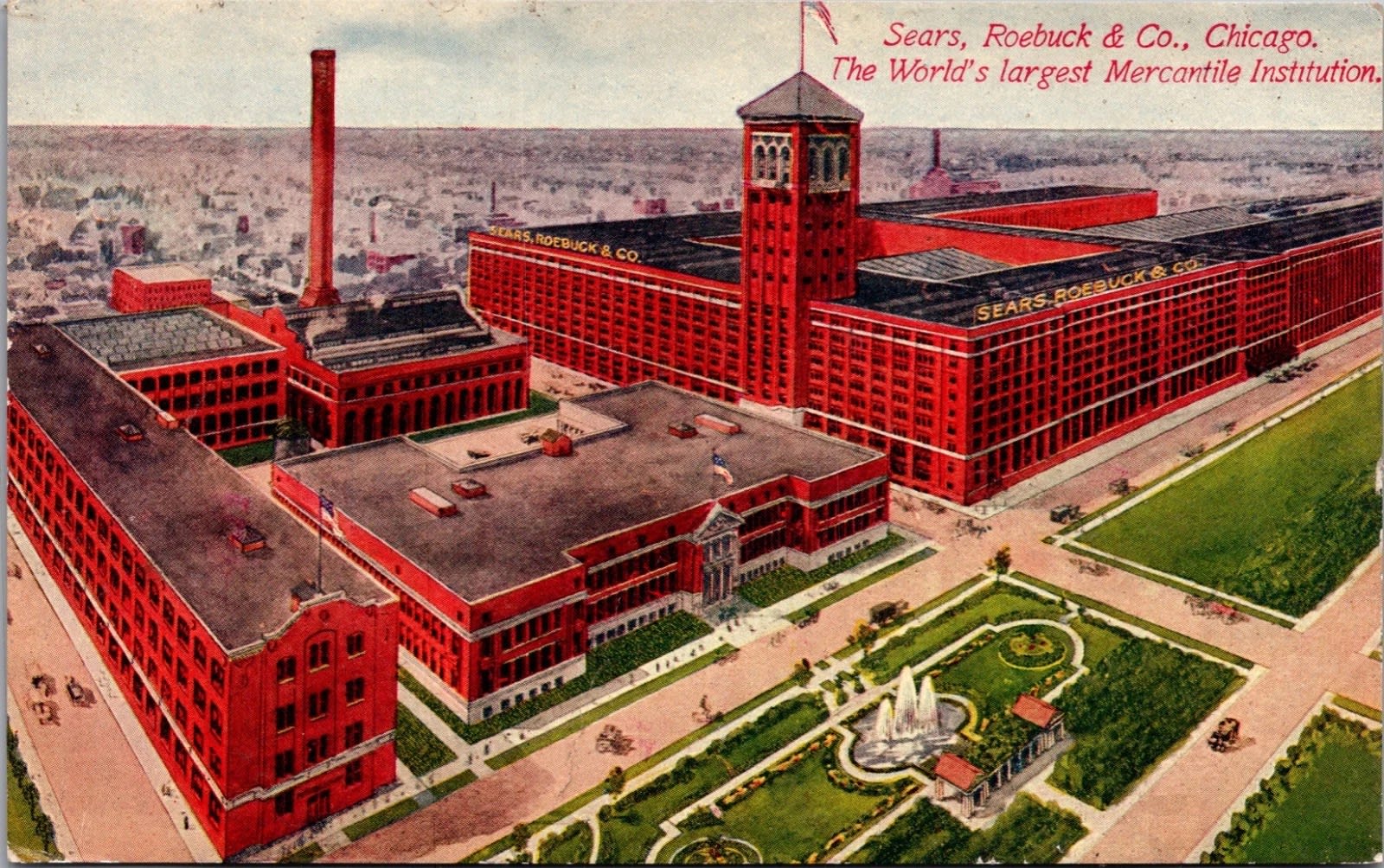
“As Chicago’s Sears, Roebuck and Co. started to grow more than a century ago, its farsighted leaders wanted a green space for their headquarters. They commissioned the Sears Sunken Garden, an unlikely oasis across the street from the retailer’s main administration building on the West Side’s Homan Avenue.
”The 1907 garden was ‘sunken’ below street level to provide peace and quiet as horse-drawn wagons and early motor vehicles clattered by. Ornamental fountains, a reflecting pool, ponds stocked with goldfish and carefully designed plantings nestled just below the garden’s defining feature — a dramatic, 100-foot-long row of classical columns known as a pergola.
”A slice of the Mediterranean had come to a busy city street.
”Today, Sears is a memory, much of its Homan Square complex is boarded up and the once-marvelous garden is a wreck. April brought welcome news that this neglected landmark finally would be getting a face-lift, thanks largely to a $1 million pledge from the city’s Richard H. Driehaus Foundation.
”Turns out, the pergola’s columns were in worse shape than expected. As work began, crews discovered the concrete had disintegrated and the structure needed to be replaced rather than repaired. The restoration halted until the Driehaus Foundation stepped up — again — with additional funding.
”’We are now back on track,’ declared Caroline O’Boyle, who serves on the nonprofit board supervising the renovation. A new timetable calls for the pergola restoration to be finished by mid-November and work on the garden itself to begin next year, she told us.
”That pattern is familiar to anyone involved in rebuilding neighborhoods that have endured decades of disinvestment. North Lawndale certainly has: It lost major employers, population and investment over generations.
”It also has an amazing history, and potential. When Sears made Homan Square the heart of its fast-growing retail empire, North Lawndale was among the hottest neighborhoods in the city.
”By the 1960s, it had become a focus of the Civil Rights Movement. The Rev. Martin Luther King Jr. famously made North Lawndale a centerpiece of his fair-housing campaign, moving his family into a rundown apartment to protest slum conditions.
”In the 1970s, Sears left for its downtown tower, marking a retreat of money and influence that devastated the neighborhood.
”The retailer’s Homan Square complex is an important Chicago landmark, and a couple of its prominent buildings have been impressively restored. The big red-brick office complex across from the Sears Sunken Garden, however, continues to rot. Timetables for shoring it up have kept slipping.
”Given the monumental challenges, could fixing up a small-ish garden really do anything to turn things around? Yes.
”A beautiful green space can indeed transform an urban neighborhood. Those efforts inspire neighbors to take pride in their communities, which in turn inspires hope for a better future — a missing element in the most troubled parts of the city.
”And we believe the late Richard Driehaus, a gregarious financier, would have loved the Sears Sunken Garden restoration. Hats off to his foundation for backing a project that fits with this one-of-a-kind local character’s legacy.
”The foundation’s financial commitment to the garden stands at $1.5 million so far today, a spokeswoman told us. Even with that, the nonprofit Friends of Sears Sunken Garden has unmet fundraising goals to see the project through. Here’s hoping the rest of Chicago does what it takes to raise up the West Side’s sunken treasure.” (Editorial Board, Chicago Tribune, 8/24/26)
”’It’s the classical centerpiece of [the] garden, and to have that restored is going to be amazing,’ said the Rev. Reshorna Fitzpatrick, chairperson of Friends of Sears Sunken Garden board. ‘It’s something you could see when you’re driving down the street — and it is going to be eye-catching to have it redone.’
”The pergola is composed of 20 classically designed columns set in tandem with a footpath through them and flanked by two Greek Revival porticos. The structure is topped by a red clay tile roof.
”Surrounded by greenery and colorful flowers during the park’s heyday, the pergola was a fine place for Sears workers to enjoy lunch, catch a summer breeze, or listen to the musical entertainment provided by the company.” (Bey, Chicago Sun-Times, 4/15/25)
Preservation Chicago applauds the Richard H. Driehaus Foundation for its deep commitment to this project. When crews opened up the pergola and found the concrete columns had disintegrated beyond repair, the discovery could easily have ended the restoration. Instead the Foundation increased its commitment to $1.5 million and the work resumed.
We also recognize the leadership of Rev. Reshorna Fitzpatrick and the Friends of Sears Sunken Garden, who have championed this two-acre garden for years, and the Foundation for Homan Square, which has kept the space in public hands through decades even when funds were scarce.
The former Sears, Roebuck and Company world headquarters campus was designated a Chicago Landmark district by the City Council in 2015, and includes four buildings and the original park with its pergola, constructed between 1905 and 1907. The large administration building across from the garden continues to deteriorate, and Preservation Chicago will continue to advocate for its stabilization and reuse.
Read the full story at the Chicago Tribune
- Editorial: The Sears Sunken Garden gets new life on Chicago’s West Side; The once-grand 1907 garden had become neglected and overgrown, The Editorial Board, Chicago Tribune, 8/24/26
- North Lawndale’s historic Sears sunken garden closer to start of restoration; Restoration of the garden’s main feature, a 100-foot long Mediterranean revival-styled pergola, is set to begin this summer, Lee Bey, Chicago Sun-Times, 4/15/25
- WIN: Driehaus Foundation Grant Catalyzes Restoration of Sears Sunken Garden; Preservation Chicago, 4/2025
- WIN: North Lawndale Sears Sunken Garden to Be Restored; Preservation Chicago