


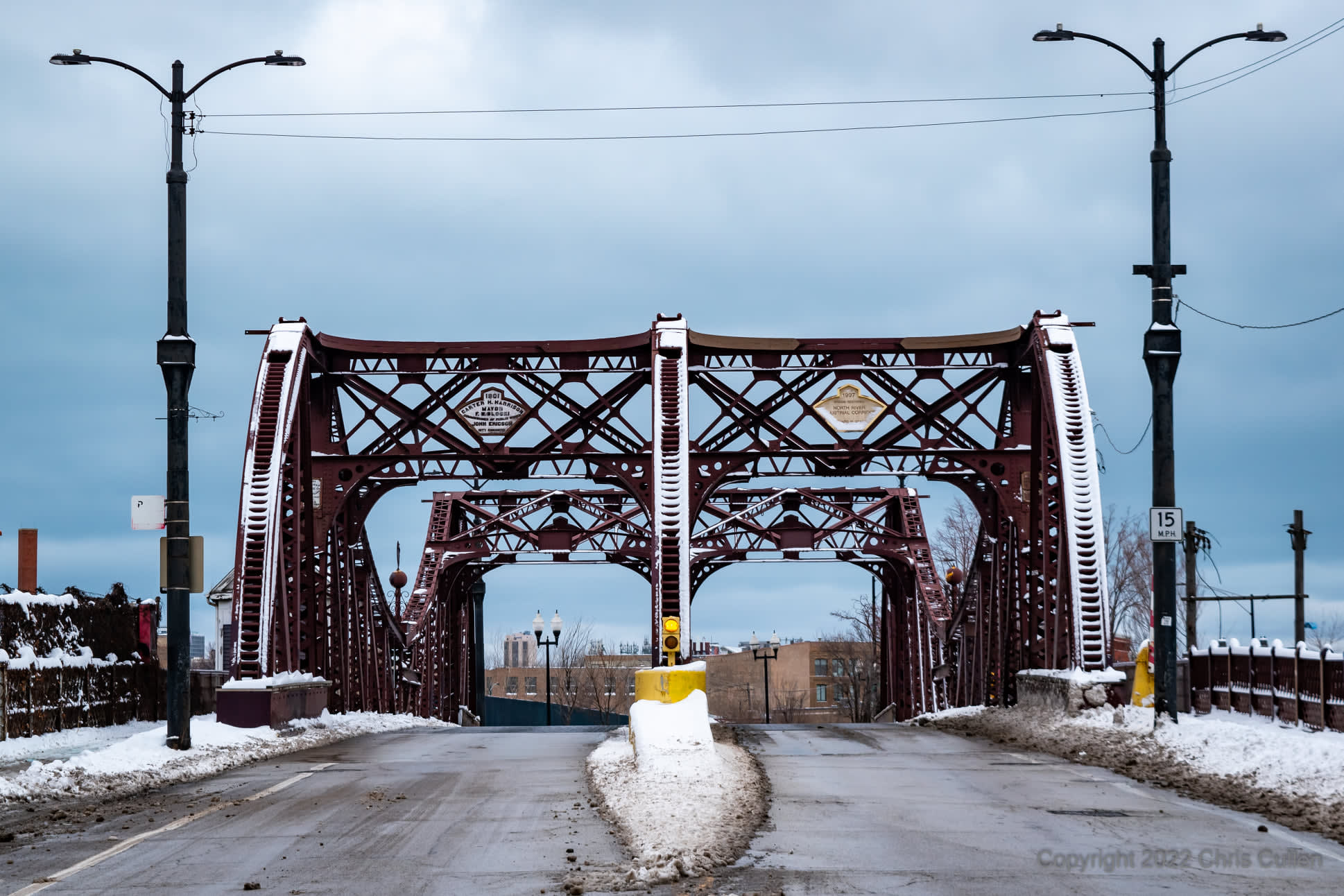


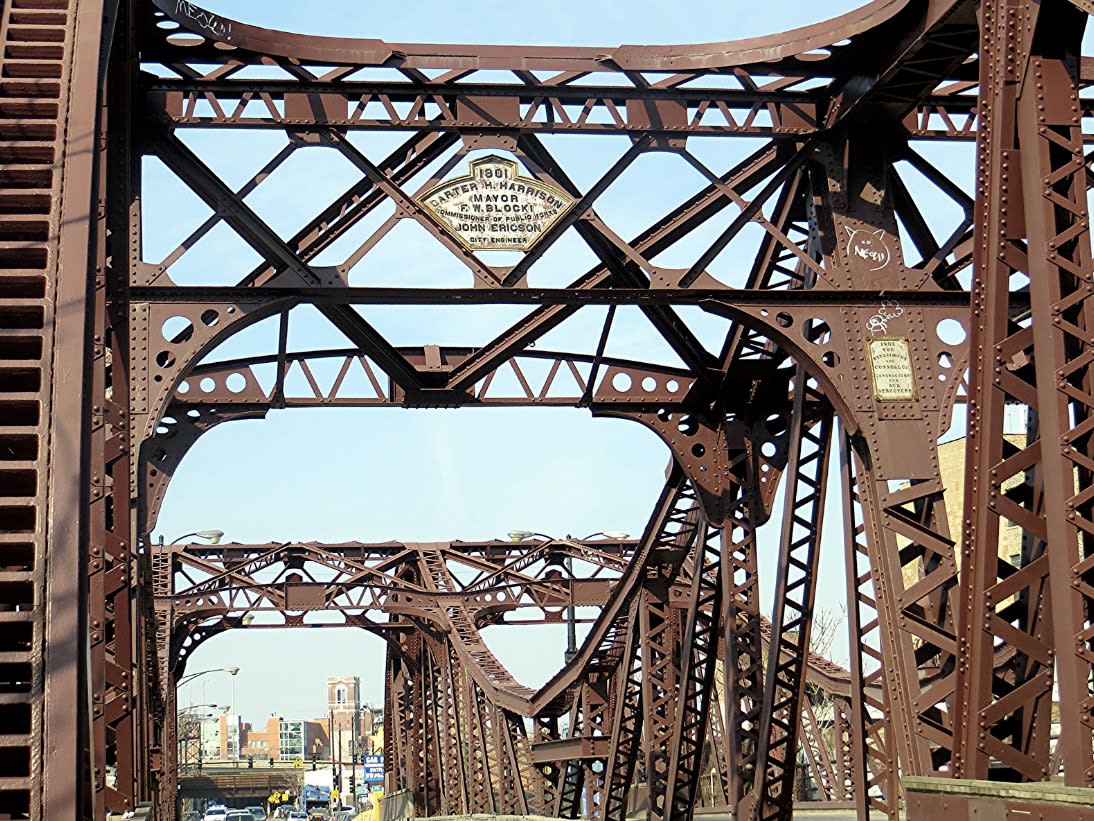
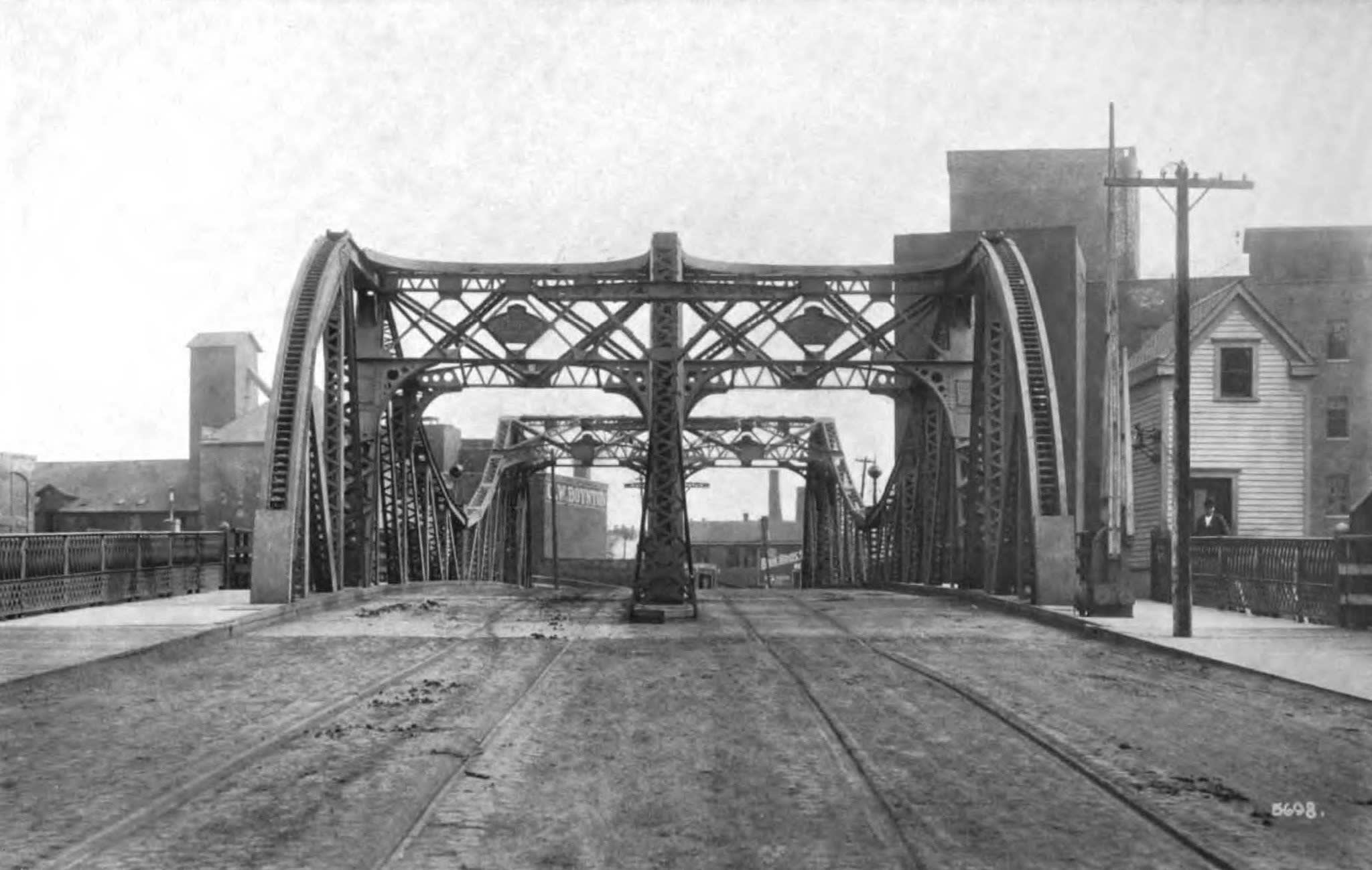

“As frustrations mount over the city’s indefinite closure of the 124-year-old Cortland Street bridge, some alderpeople want to see the structure’s landmark status rescinded so a new bridge can be built in its place, while others hope the bridge can remain or even be reused elsewhere.
”Alds. Brian Hopkins (2nd) and Scott Waguespack (32nd) told Block Club last week they are planning to introduce legislation to the City Council this month to remove the bridge’s landmark protections, which it has held for more than 30 years.
”The Cortland Street bridge has been closed to cars for the past year, when the Chicago Department of Transportation shut it down for a long-term rehabilitation project originally slated to last 18-24 months. The project was further delayed this summer because of the discovery of new issues with the more-than-century old bridge, and the rehab is now expected to take years — and no new completion timeline has been announced.
”In the meantime, the bridge remains open to pedestrians and cyclists.
”The situation has led Hopkins and Waguespack to begin taking the rare step of rescinding a structure’s landmark status, something that hasn’t been done for 40 years, preservationists and city officials said.
”But local preservationists are worried a landmark rescission could create a problematic precedent for the future of preserving important historical structures in Chicago. Instead, they’d like to see a new bridge built close by or, possibly, the existing structure on Cortland reused elsewhere. Some have floated the idea of using it for the long-planned extension of the 606’s Bloomingdale Trail over the Chicago River.
”A transportation department spokesperson said last week, however, that while the city is considering both rehabbing or replacing the bridge, removing the local landmark protections alone would not allow them ‘to immediately move forward with replacement.’
”Originally built in 1902, the Cortland Street Bridge’s fixed trunnion bascule design was developed by city engineers and later copied across Chicago and all over the world.
”’So identified with the city is the trunnion bascule bridge that it is known internationally as the “Chicago style,”’ according to a 1989 landmark report.
”Ward Miller, executive director at advocacy group Preservation Chicago, said his organization is in full agreement that something needs to be done to resume car traffic on Cortland as soon as possible.
”But Miller said the issue with the bridge is really about poor maintenance over the years by the city, not its historical protections.
”A building’s landmark status in Chicago has not been revoked since the 1980s, when the McCarthy Building Downtown was torn down to make way for Block 37 — something Miller called a ‘huge embarrassment.’
”’This too could be a huge embarrassment,’ Miller said. ‘Do we want to open the door to suddenly removing buildings or structures from landmarks? Which I think is a dangerous precedent and a place we don’t really want to go.’
”Instead, Miller believes other solutions could be found. Among ideas like relocating the bridge, the group proposes building a new bridge next to or close by the existing one. Cars and other vehicles could use that structure, while pedestrians and cyclists could continue to use the landmarked one, Miller said.” (Myers, Block Club Chicago, 9/8/26)
”The 124-year-old bridge — which predates Daniel Burnham’s Plan of Chicago, the construction of Wrigley Field and the publication of Upton Sinclair’s ‘The Jungle’ — is also a protected city landmark. It’s said to be the oldest model of a trunnion bascule bridge, an iconic movable bridge design native to Chicago’s landscape.
”The aldermen’s push, spurned by historical preservation advocates, highlights an urban philosophical debate: What’s a city to do when its architectural heritage and aging infrastructure are one and the same?
”’Chicago’s bridges are a defining part of our city’s identity,’ said Frank Butterfield, interim CEO and president of Landmarks Illinois. ‘The bridges have been a visible reminder of Chicago’s history as a transportation and commercial hub,’ he said.
”Chicago bridge designers invented the bascule bridge, Butterfield explained. Bascule means ‘seesaw’ in French, and a bascule bridge can be raised vertically to allow boats to pass through. ‘That was a new design, and the world took note,’ he said.
”Ward Miller, executive director of the group Preservation Chicago, described the potential rescission of the bridge’s landmark status as a slippery slope.
”’You could potentially start an avalanche that would undermine the Landmarks Ordinance in Chicago, which would undermine perhaps some of the most important buildings built in our city (which) are known around the world,’ he said.
”’It would make Chicago look foolish,’ Miller said. ‘And I think it would be a huge embarrassment to our city.’
”CDOT said that even revoking the bridge’s city landmark status — a maneuver that has happened only once in Chicago history, when the City Council revoked the landmark status of the McCarthy Building to pave the way for the Block 37 development — would not necessarily allow the city to immediately move forward with a bridge replacement.
”’Because all City of Chicago bascule bridges have been designated eligible for the National Register for Historic Places by the Illinois State Historic Preservation Office, the project remains subject to certain state and federal environmental and historic-preservation reviews,’ department spokesperson Erica Schroeder said, ‘regardless of the bridge’s designation as a City of Chicago landmark.’
”CDOT has previously pointed to the age of the bridge, which was first landmarked by the city in 1991, as one of the barriers to a speedy fix.
”’These early bridges were designed in a way that makes critical structural components extremely difficult to access for inspection, maintenance, and repair,’ the department said in August.
”The Cortland Street Bridge is currently open to pedestrians and to bicyclists, and one idea floated has been to keep the bridge open for walkers and cyclists but closed to drivers — while building an adjoining bridge for vehicle traffic, or adding another bridge nearby.
”Neighborhood resident Emily Marzonie acknowledged she’d been affected by the traffic mess in the area, which she said needed to be addressed.
”But, Marzonie said, she would hope the bridge wouldn’t need to be totally destroyed for that to happen.
”’It’s worth saving things in the city,’ she said. ‘The more that we remove that, we’re kind of losing what makes Chicago Chicago.’” (Soglin, Chicago Tribune, 9/9/26)
”In May, CDOT said a full structural assessment of the 125-year-old drawbridge would be completed in June. This month, CDOT said the assessment found that the bridge is no longer able to carry vehicular traffic safely, and the rehabilitation approach must be reevaluated.
”CDOT said the restoration of the Cortland Street Bridge will take years, and it will remain closed to vehicles as CDOT goes through environmental review, engineering, and design work.
”The bridge will stay open for cyclists traveling between Lincoln Park and Bucktown and its north sidewalk will remain open for pedestrians.
”’It’s been a lifeline for cyclists and walkers to get across,’ said cyclist Dustin Manker.
”The project is more complex than a typical bridge rehab effort because the Cortland Street Bridge is a first-generation trunnion bascule bridge, one of the earliest movable bridge designs developed in Chicago in the early 20th century.
”The Cortland Street Bridge opened in 1902 and became a model for structures spanning waterways. The bridge was designated a Chicago landmark in 1991.
”’I appreciate the fact that they are keeping the history of it and restoring it rather than making a new one … that’s cool to me,’ said Annie Ryzak, who works near the bridge, but adds that the timeline for the project is unfortunate.” (Harrington and De Mar, CBS News Chicago, 8/24/26)
Preservation Chicago named Chicago River Bridges and Bridge Tender Houses to our 2026 Chicago 7 Most Endangered list in March, 2026. The Cortland Street Bridge is among the most significant of the bridges. Chicago has the largest collection of movable bascule bridges in the world, and the 1902 Cortland Street Bridge, designed by City Engineer John Ernst Ericson, was the first fixed trunnion bascule bridge ever built. The design was copied across the city and around the world, and it is known internationally as the Chicago style.
Preservation Chicago shares the frustration of Chicagoans. A year of closure with no completion timeline is a serious hardship for the community. The condition of the bridge, however, is the result of deferred maintenance rather than landmark designation, and rescinding the designation will not repair a single corroded steel member.
Preservation Chicago encourages the City Council to reject this ordinance, and we encourage CDOT to publish a schedule and scope of work. Better options are available. A new vehicular bridge could be constructed adjacent to or near the existing structure while the landmarked bridge continues to serve pedestrians and cyclists, as it does today.
If the span cannot be rehabilitated in place, it could be removed, restored, and reused elsewhere, and the planned extension of the Bloomingdale Trail over the Chicago River is a promising candidate. We also support Alderman Hopkins’s suggestion that the nearby historic swing bridge be considered for landmark protection.
Read the full story at Block Club Chicago and the Chicago Tribune
- Could 124-Year-Old Cortland Bridge Lose Its Landmark Status? Alderpeople Push To Tear It Down; With the bridge closed indefinitely, Alds. Brian Hopkins and Scott Waguespack want to rescind its landmark status to make way for a new one. But preservationists want it to be reused — possibly as part of the 606’s Bloomingdale Trail, Quinn Myers, Block Club Chicago, 9/8/26
- Is the Cortland Street Bridge a precious landmark or a traffic albatross? Aldermen want Cortland bridge’s landmark status revoked, an effort spurned by preservation advocates, Talia Soglin, Chicago Tribune, 9/9/26
- Chicago’s Cortland Street Bridge to stay closed for years for complex restoration, Adam Harrington and Charlie De Mar, CBS News Chicago, 8/24/26
- Cortland Bridge Will Remain Closed For Years, Vexing Neighbors After New Problems Found, Block Club Chicago, 8/24/26
- Cortland Street Bridge Closing This Month Until 2027 For Restoration; The bridge closes to car traffic Sept. 22. Its sidewalk will remain open for a few additional months before also closing during the project, Quinn Myers, Block Club Chicago, 9/5/25
- Cortland Street Drawbridge and Cermak Road Bridge; Landmark Designation Report, Commission on Chicago Landmarks, 1989
- Chicago River Bridges and Bridge Tender Houses; a Preservation Chicago 2026 Chicago 7 Most Endangered, 3/4/26
- WIN: Landmarked Cortland Street Bridge Restoration Begins; Preservation Chicago, 10/2025
- WIN: Historic Lake Street Bridge Begins Major Restoration Project; Preservation Chicago
- THREATENED: Historic Chicago Avenue Bridge Targeted for Demolition; Preservation Chicago