


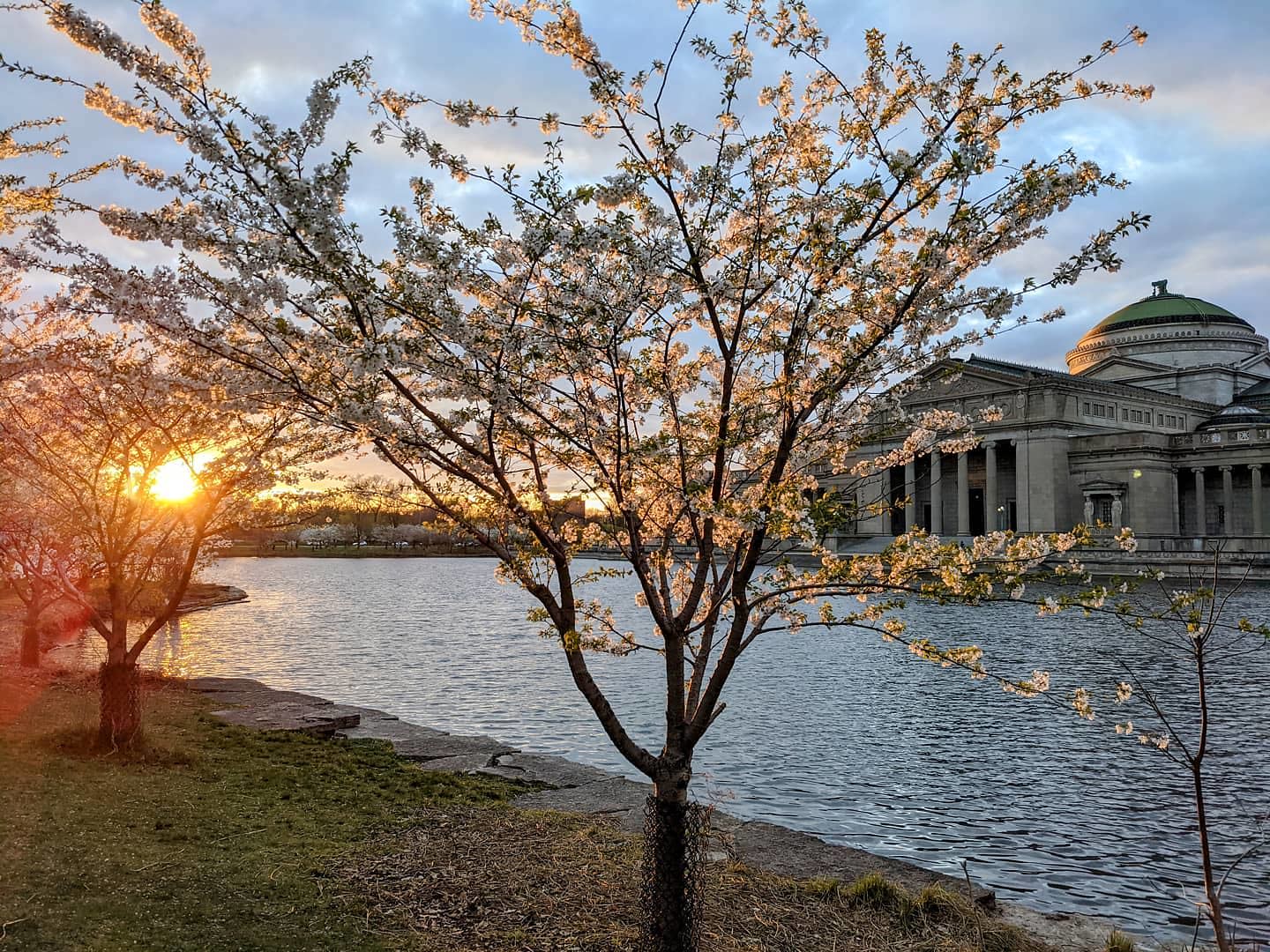

PITN: ‘Give While You Live’ — Julius Rosenwald, the Humble Founder Who Refused to Put His Name on the Museum of Science and Industry
“Rosenwald was CEO of Sears, Roebuck and Co. and one of the greatest philanthropists of the 20th century. Yet the museum he founded never bore his name. Why was the MSI never named after Rosenwald? The simple answer is that he didn’t want it to be. But the longer answer lies in what legacy Rosenwald wanted to leave for communities and his greater philosophy on giving.
“After he retired as CEO in 1924, Rosenwald formed a board to create the museum. At first, the board named the project the Rosenwald Industrial Museum, but he was adamant about going through the two-year process to change the paperwork and remove his name.
“‘If no name is used, it will belong to the people the same as the Art Institute,’ he wrote in a letter, urging for the removal of his name. ‘The people supply the building and will be taxed to support it and then will be solicited to give exhibits and again others contribute money to memberships and special purposes.’
“The renamed Museum of Science and Industry didn’t open until 1933, a year after Rosenwald’s death, but it remained true to his vision: the people’s museum, open to all.
“In the Chicago Journal in 1926, Rosenwald said he wanted a museum ‘free to all where the mysterious processes of industry will be made so plain that every child can understand and learn how the world makes, trades in, and transports its needs.’
“Rosenwald was born in Springfield, Illinois, in 1862 to Jewish immigrants from Germany. He invested in Sears, Roebuck and Co. and became its president and CEO in 1908 after co-founder Richard Sears resigned.
“‘He was indeed a gifted businessman, although he never took a course in business,’ [grandson Peter Ascoli] said. ‘He never finished high school, and he never went to college … Because he was the sort of man he was, he refused to accept an honorary degree from any educational institution that wanted to offer one to him.’
“One of his first major projects was with the YMCA, specifically to build and construct YMCAs for Black people across the U.S. … Although Rosenwald viewed YMCAs as valuable places for recreation and travel, Black people were often not allowed in YMCAs in white neighborhoods. In 1911, he offered to donate $25,000 to groups of Black people in major cities if they could raise an additional $75,000 to cover construction.
“In about a year, coalitions of Black people in six cities had all reached their campaign goals, with other cities well on their way. This is how Chicago got its famous Wabash YMCA — the place that would birth Negro History Week, which would turn into Black History Month.
“Rosenwald then joined Booker T. Washington in a 1912 program to build elementary schools in Southern states, which in just a few decades would educate 1 in 3 Black children.
“‘By 1938, there were over 5,300 of these schools throughout the South with African American communities, sharecroppers, moonshiners, teachers, day laborers, housekeepers donating $4.7 million towards this effort, and Julius Rosenwald donating $4 million to this effort,’ [historian Kimberly] Ransom said.
“Rosenwald’s philanthropy was radical for the time. He pioneered a different way of giving. ‘He created the first foundation in American history to go out of existence voluntarily,’ Ascoli said.
“Instead of saving money for later use, he wanted to spend it on the people and causes that needed it now. His philosophy was to ‘give while you live,’ and his foundation, the Julius Rosenwald Fund, went out of existence in 1948 — exactly how he planned.” (Nettles, WBEZ Curious City, 7/15/26)
Preservation Chicago has been working to support the Rosenwald Campaign to honor Julius Rosenwald and the Rosenwald Schools with Dorothy Canter for several years. We were the first Chicago organization to sign on as a sponsoring partner and hope to see a strong Chicago presence for the Julius Rosenwald and Rosenwald Schools National Historical Park.
- ‘Give while you live’: Who is Museum of Science and Industry founder Julius Rosenwald?; The museum was renamed in 2024 to highlight megadonor Ken Griffin. Its founder did not want to put his own name on the institution, Arionne Nettles, WBEZ Curious City, 7/15/26
- Julius Rosenwald: The Man Who Built Sears, Roebuck and Advanced the Cause of Black Education in the American South; Peter M. Ascoli, Indiana University Press, 2006
- “The Legacy of Julius Rosenwald”, a film by Lincoln Presidential Foundation and Looking for Lincoln with generous support from a National Park Foundation Storytelling Grant. (16:29)
- The most famous Jewish philanthropist you may have never heard of and the campaign to amplify his legacy with a national park; Julius Rosenwald was a revolutionary philanthropist, yet his name is not well known, in part because his foundation shut down soon after his death, Rachel Kohn, JewishInsider, 5/28/25
- Julius Rosenwald & Rosenwald Schools National Historical Park Campaign website
- Rosenwald, A film by Aviva Kempner