


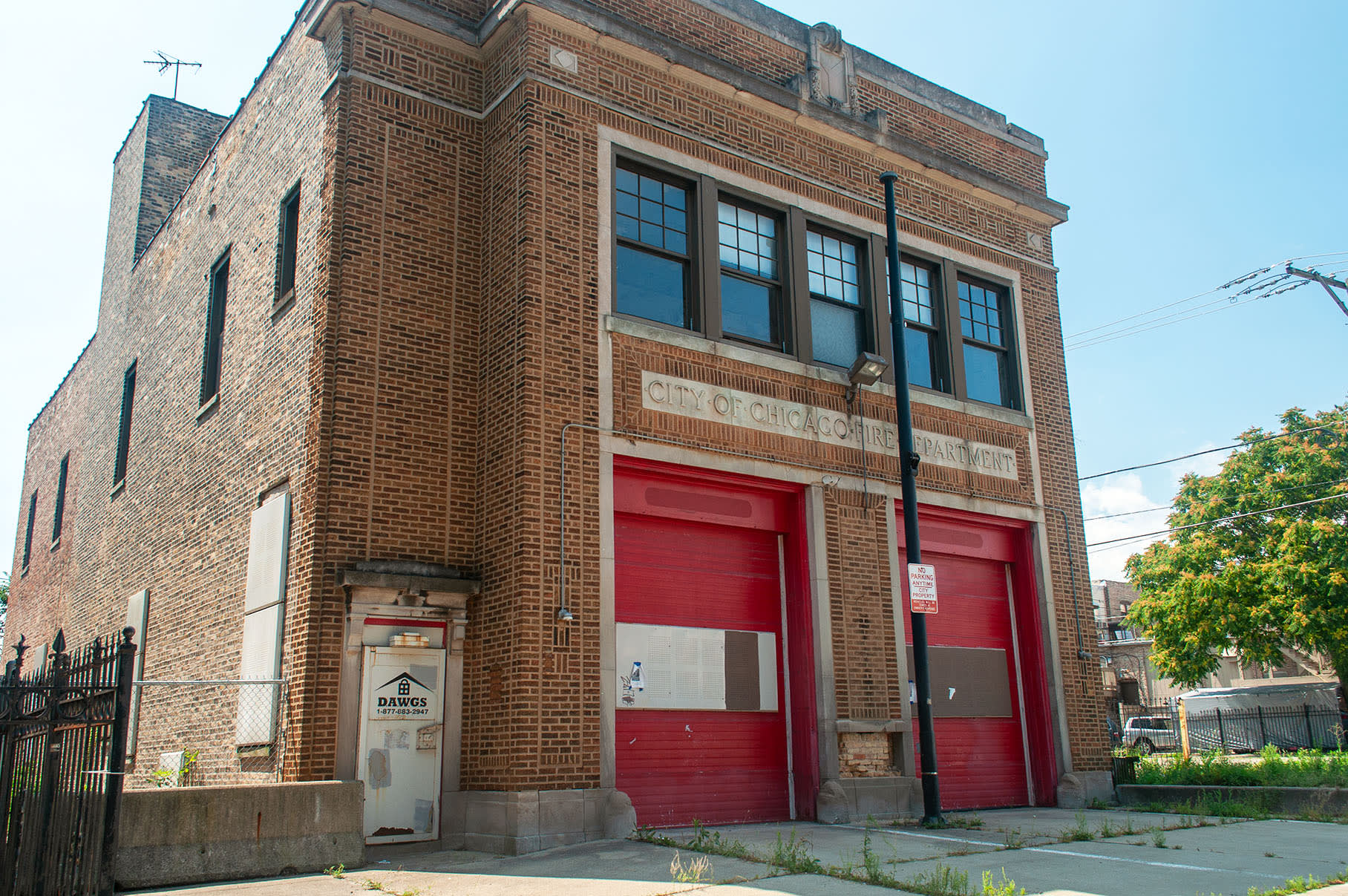

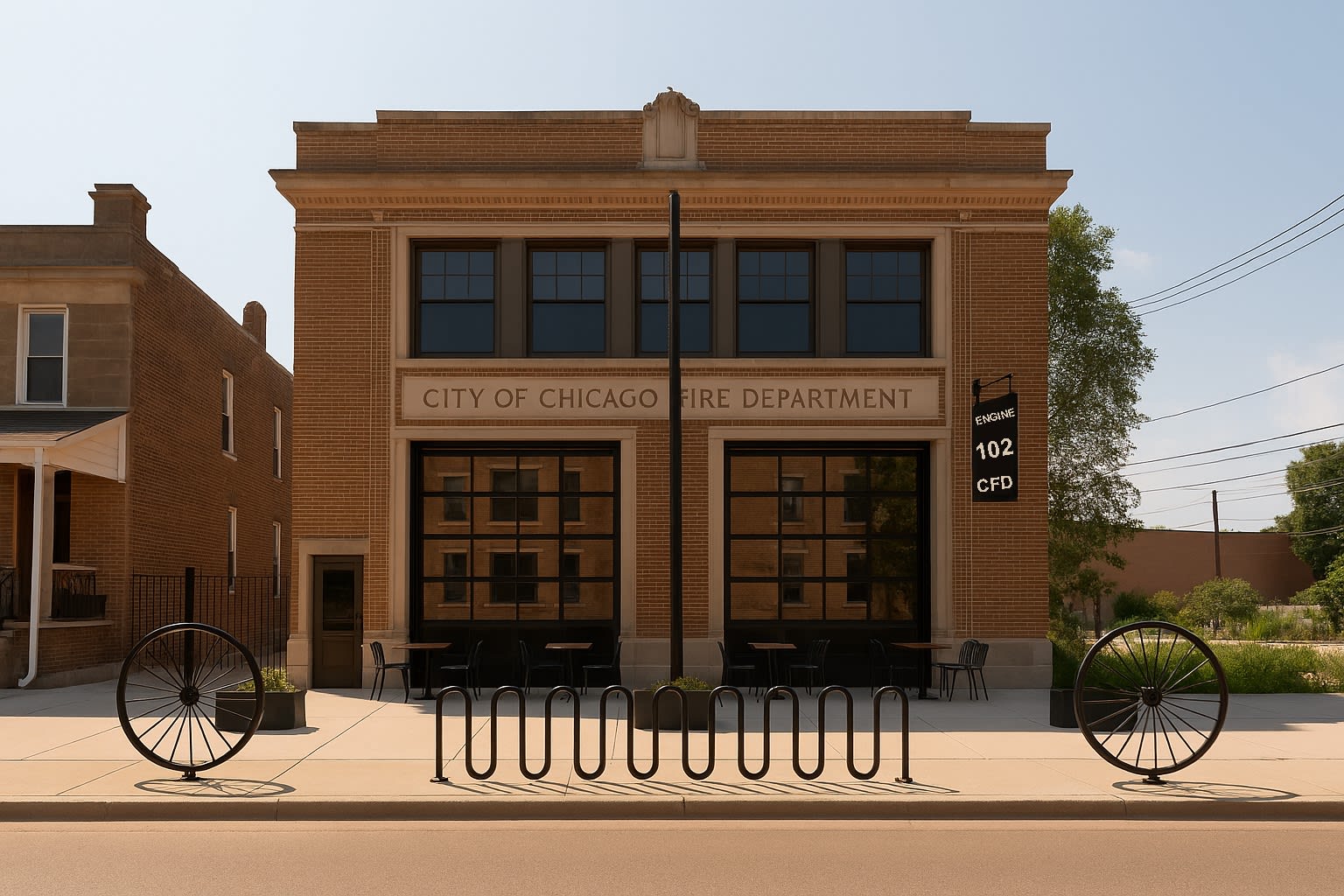
“A shuttered fire station in Rogers Park is going to be restored for community use by a development team with roots in the neighborhood.
“Developer Ryan Cummings and Michael Salvatore, of Heritage Hospitality Group, are working to revitalize the former fire station at 1721-23 W. Greenleaf Ave. They hope to open a cafe, bar or something similar on the ground floor, with an event space and co-working options on the second floor.
“The former Engine Co. #102 firehouse was active from 1915 to 2009, when the Clark Street fire station was opened. The old firehouse has sat vacant since then.
“The city put out a request for proposals to sell the city-owned property in October, and Cummings and Salvatore’s pitch was the winning selection. The team plans to buy the building for just over $350,000.
“Cummings has a background in development and real estate, and he currently works at Nicholson Construction. Salvatore founded the hospitality group behind the popular Heritage Coffee & Bikes in Lakeview as well as Heritage Outpost and the bar Larry’s, both in Uptown’s historic Lawrence House building. The two are friends and neighbors in Rogers Park.
“The exact scope of the project will take shape as the team figures out financing in the coming months. He plans to apply for a Community Development Grant — which typically funds construction, rehabilitation or planning for projects that spark neighborhood investment — later this summer.
“The team wants to retain as many of the building’s historical features as they can, like the original staircase, marble shower separators and metal lockers. The building is in ‘dilapidated’ condition, with peeling paint, standing water and holes in the roof, so restoring it will be a long process.” (Savedra, Block Club Chicago, 6/2/26)
“Led by developer Ryan Cummings and Michael Salvatore of Chicago’s Heritage Hospitality Group, the $3 million project aims to respect the building’s historic bones and preserve its character while injecting modern utility.
“The redevelopment will split the building into two distinct, community-focused concepts. The ground floor will be a 2,000-square-foot bustling coffeehouse, designed to welcome neighbors just off the busy Clark Street retail strip. The second floor will feature 4,000 square feet of flexible event and office space, perfect for local gatherings, remote work and private functions.
“‘This thoughtful proposal will preserve a beautiful building with new uses that reinforce its role as a community anchor while complementing pedestrian-oriented retail activity on nearby Clark Street,’ announced DPD Commissioner Ciere Boatright.” (Lopez, Time Out Chicago, 6/1/26)
Preservation Chicago helped to circulate and amplify the City of Chicago-issued Request for Proposals in October 2025. We are thrilled to see a strong, community-based development team emerge as the winning proposal. The selection of two Rogers Park neighbors with deep roots in neighborhood hospitality and construction is precisely the outcome hoped for from an RFP for a small historic vacant neighborhood municipal building like this former Chicago firehouse.
The former Engine Co. #102 firehouse at 1721-23 W. Greenleaf was built in 1915. It was designed as the first fully motorized station – specifically, the first Chicago firehouse built without a stable – as the city had decisively moved past horse-drawn fire-fighting apparatus by that date.
The two-story brick building housed Engine Company 102, Truck Company 25, and Ambulance 56 for nearly a century, serving Rogers Park through the neighborhood’s full arc of development from early-20th-century annexation into the city’s residential fabric and its emergence as one of Chicago’s most diverse and culturally layered neighborhoods.
The 1940 addition — a two-story rear expansion to accommodate larger modern equipment — added to the building’s massing without compromising its street character. The building served its original purpose until 2009, when the opening of the Clark Street station rendered it redundant.
Seventeen years of vacancy have taken a toll: the building is currently in dilapidated condition, with the structural and envelope challenges one would expect of a century-old civic building left without maintenance. The development team’s commitment to retaining the original staircase, marble shower separators, and metal lockers suggest that the developers are fully embracing the historic fabric of the building.
The proposed neighborhood coffeehouse on the ground floor, flexible event and co-working space above is well-matched to the building’s scale and to the needs of a neighborhood that Ald. Maria Hadden (49th) and Cummings himself have identified as hungry for a genuine “third space.” The building’s location, one block from the Clark Street commercial corridor, positions it to serve as both a destination and a complement to the surrounding retail fabric.
Financing has not yet been secured, and the project will need to complete design review and community outreach before permits can be issued. Preservation Chicago encourages the development team to pursue all available preservation financing tools alongside the Community Development Grant they plan to apply for.
We also renew our call for the developer and City of Chicago to pursue Chicago Landmark designation for this building. A 111-year-old civic firehouse that represents a meaningful chapter in Rogers Park’s history, and that is now on the path to adaptive reuse, is exactly the kind of building the Chicago Landmark Designation was intended to recognize and protect.
Preservation Chicago congratulates Ryan Cummings, Michael Salvatore, Heritage Hospitality Group, and the City of Chicago’s Department of Planning and Development for selecting a proposal that puts preservation first. We look forward to the restoration of Engine Co. #102 as a living part of Rogers Park’s neighborhood fabric.
Read the full story at Block Club Chicago
- Rogers Park Firehouse Could Become Cafe, Co-Working Space As Developers Work To Restore It; Madison Savedra, Block Club Chicago, 6/2/26
- This former Chicago firehouse in Rogers Park is becoming a cafe and event space after a $3 million redevelopment plan; Gerrish Lopez, Time Out Chicago, 6/1/26
- BUYER WANTED: City Requests Proposals for Two Historic Chicago Firehouses at 1721 W. Greenleaf Ave. and 1405 E. 62nd Pl.; Preservation Chicago, 10/2025
- Shuttered Rogers Park Firehouse To Reopen as Café, Event Venue, City of Chicago Press Release, 5/28/26
- Requests for Proposals for 1721 W. Greenleaf Ave, a Retired 1915 firehouse available for revitalization, City of Chicago, October 2025